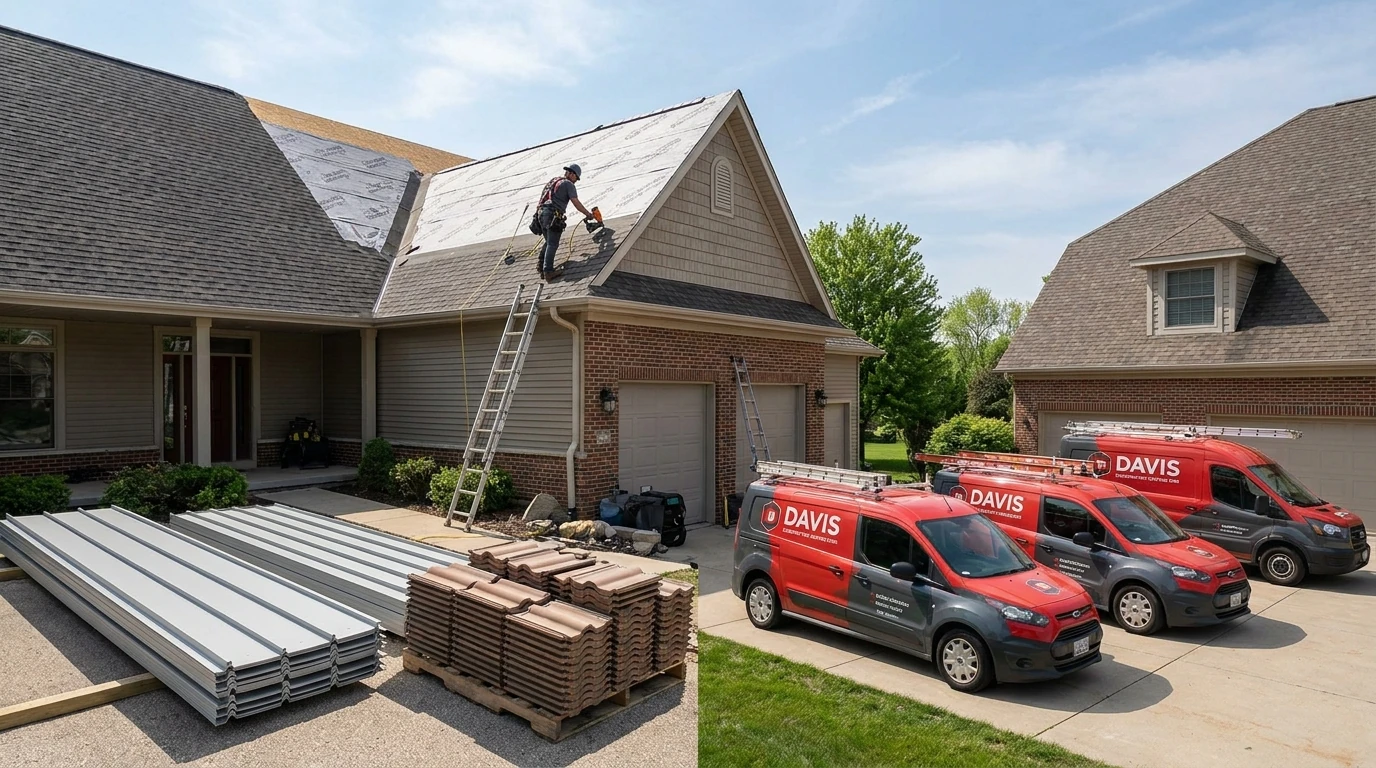
If you’re replacing a roof in Madison, the short answer is this: asphalt shingles are the budget-friendly default and work fine for most homes, metal roofing earns its higher price tag through longevity and storm resistance, and tile is a durable but heavy option that only makes sense on homes built to carry the weight. The right choice depends less on which material is “best” and more on how long you plan to stay in the house, what your roof structure can support, and how much upfront cost you’re willing to trade for lower long-term maintenance.
Why This Decision Matters More in North Alabama
Madison sits in a climate that puts real stress on a roof. Summers are hot and humid, which accelerates wear on asphalt shingles and keeps attics running warm. Spring and early summer bring severe thunderstorm season to the Tennessee Valley, with wind gusts and hail that test every seam, fastener, and shingle tab on a roof. A material that performs well in a dry, mild climate might not hold up the same way here, so it’s worth weighing each option against what a Madison roof actually has to survive year after year.
Asphalt Shingles: The Default for a Reason
Asphalt shingles remain the most common roofing material in the region, and for most homeowners they’re still the right call.
- Upfront cost: lowest of the three materials, which matters if you’re budgeting a full replacement rather than a repair.
- Installation: faster to install than metal or tile, which keeps labor costs down and gets the job finished in less time.
- Repairability: individual shingles can be replaced after storm or hail damage without redoing the whole roof.
- Lifespan: typically rated for 20 to 30 years depending on the shingle grade, though Alabama heat and UV exposure tend to push wear toward the shorter end of that range.
- Trade-off: asphalt is the most vulnerable of the three to wind uplift and hail bruising, which is the most common reason homeowners file roof insurance claims after a North Alabama storm.
If your current roof is asphalt and nearing the end of its service life, a full tear-off and reroof is usually more cost-effective than patching repairs year after year.
Metal Roofing: Higher Cost, Lower Lifetime Maintenance
Metal roofing has become a more common upgrade choice as homeowners look past the sticker price toward total cost of ownership.
- Durability: standing seam and metal shingle systems resist wind uplift far better than asphalt and shrug off hail that would bruise or crack shingle tabs.
- Lifespan: a correctly installed metal roof can last 40 to 50 years or more, often outlasting the homeowner’s time in the house.
- Energy performance: reflective metal roofing reduces attic heat gain, which can ease the load on air conditioning during a Madison summer.
- Upfront cost: typically two to three times the cost of asphalt, which is the main reason it isn’t universal despite the performance advantages.
- Noise and expansion: rain noise is less of an issue than people assume once proper decking and underlayment are in place, but metal does expand and contract with temperature swings, so installation detail matters more than with asphalt.
Metal is worth serious consideration if you’re planning to stay in the home long term, or if your current roof has taken repeated storm damage and you’re tired of the repair cycle.
Tile Roofing: Built for Longevity, Not Every Structure
Clay and concrete tile show up less often in this part of Alabama, but they’re worth understanding if you’re drawn to the look or inherited a tile roof with the home.
- Lifespan: tile can last 50 years or longer with minimal degradation from UV or moisture.
- Weight: this is the deciding factor for most homes. Tile is significantly heavier than asphalt or metal, and not every roof structure is framed to carry that load without reinforcement.
- Cost: tile and the framing work it sometimes requires make it the most expensive option of the three, both for material and installation.
- Breakage risk: individual tiles can crack under impact from falling limbs or severe hail, and matching replacement tiles on an older roof can be difficult.
Tile tends to make the most sense on homes originally designed for it, rather than as a retrofit on a standard wood-framed Madison house.
Matching the Material to Your Roof and Your Plans
Before picking a material, it helps to answer a few practical questions:
- How long do you plan to own the home? A shorter horizon often favors asphalt’s lower upfront cost; a longer one shifts the math toward metal.
- What can your roof structure support? A structural assessment matters before committing to tile, and is worth a quick check even for metal on an older home.
- What’s your storm history? If hail and wind damage have been a recurring issue, the added cost of metal may pay for itself in avoided repairs and claims over time.
- What does your HOA or neighborhood allow? Some covenants restrict roofing materials or colors, so it’s worth checking before you get attached to an option.
A roofing contractor who inspects the existing decking, framing, and attic ventilation can tell you which materials are realistic for your specific house, not just which ones sound good in the abstract.
Getting a Professional Opinion Before You Decide
Material comparisons only go so far without someone looking at your actual roof. Age, slope, decking condition, and existing storm damage all affect which materials are viable and what the real installed cost will look like. If you’re weighing a replacement, a roofing inspection is the next practical step, whether the goal is a straightforward reroof or an upgrade to a more storm-resistant material.
Davis Construction Contractors can walk a Madison homeowner through what each material would mean for their specific roof, from framing capacity to long-term maintenance, before any decision gets made. Call (256) 771-0326 to schedule a look at your roof and talk through what fits your home and your budget.