
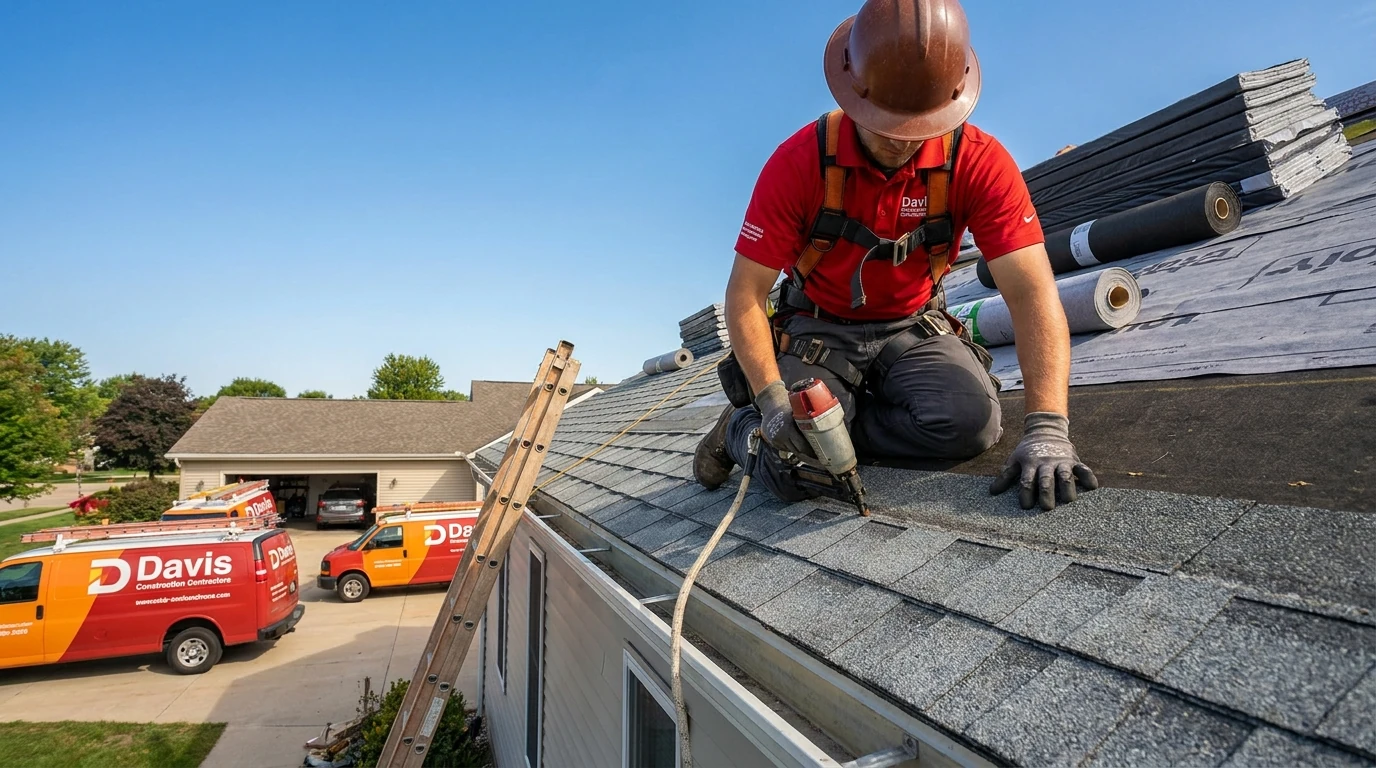
A typical residential roof replacement takes one to three days once the crew starts tear-off, with most standard asphalt shingle roofs in the 1,800 to 2,800 square foot range wrapping up in a single day. Larger homes, steep or complex rooflines, multiple layers of old shingles, or a switch to a different material like metal or architectural shingles can stretch the job to two or three days. That’s the on-site work. The full timeline, from your first call to the last nail, usually runs anywhere from a few days to a few weeks once you factor in the estimate, material ordering, permitting, and weather windows.
What Actually Happens During a Roof Replacement
Most roof replacements follow the same basic sequence, whether it’s a quick single-day job or a multi-day project:
- Tear-off. The crew strips the old shingles, underlayment, and any damaged flashing down to the decking. This is the loudest, messiest part, and it’s when hidden problems, like soft or rotted decking, show up.
- Deck repair. Any plywood or OSB sheathing that’s water-damaged or delaminated gets replaced before anything new goes down. This step is impossible to quote precisely until the old roof is off.
- Underlayment and flashing. A synthetic or felt underlayment goes down first, followed by new flashing around chimneys, vents, skylights, and valleys, since flashing failure is one of the more common sources of roof leaks.
- Shingles or roofing material. The new roofing goes on in courses from the eaves up, with ridge caps finishing the job at the peak.
- Cleanup and inspection. A magnetic sweep for stray nails, a haul-away of old materials, and a final walk-through.
For a straightforward shingle-over-shingle tear-off on an average-size home, steps 1 through 5 can realistically happen in a single working day. Add a layer of old shingles, a steep pitch, multiple dormers, or decking that needs rebuilding, and you’re looking at two to three days.
Factors That Change the Timeline
A few variables move the needle more than anything else:
- Roof size and complexity. Square footage matters, but roofline complexity (valleys, dormers, multiple pitches) slows a crew down more than raw size does.
- Number of existing layers. Tearing off two layers of old shingles takes meaningfully longer than one.
- Decking condition. Rotted or soft sheathing isn’t visible until tear-off starts, so it’s the most common reason a one-day estimate becomes a two-day job.
- Material choice. Standard asphalt shingles install fastest. Architectural shingles, metal panels, or tile take longer per square because of the extra steps involved.
- Weather. Roofing is weather-dependent work. Rain stops a tear-off cold, since an open roof deck can’t sit exposed overnight if there’s a storm coming.
- Access. Steep driveways, fenced yards, or houses with limited equipment staging space can slow material delivery and debris removal.
What Happens Before the Crew Shows Up
The part of the process most homeowners underestimate isn’t the install, it’s everything before it. A typical sequence looks like:
- Inspection and estimate: a day to a week, depending on scheduling.
- Material ordering: in stock shingles can arrive within days; specialty colors, metal panels, or tile may take several weeks to arrive from the manufacturer.
- Permitting: Madison and surrounding Madison County jurisdictions typically require a building permit for a full roof replacement, and turnaround time varies by the local permitting office.
- Insurance claim processing (if applicable): if the replacement is storm-related, waiting on an adjuster inspection and claim approval is often the single biggest delay in the whole process, sometimes longer than the physical installation itself.
If you’re planning ahead rather than reacting to a leak, booking a few weeks out during peak season, spring through early fall when north Alabama sees the most roofing demand after storm season, is normal and doesn’t mean anything has gone wrong.
What Can Push a Job Past the Original Estimate
A contractor’s quoted timeline is based on what they can see from the ground and a visual inspection. A few things commonly extend that estimate once work is underway:
- Hidden decking damage. This is the most frequent cause of a job running long. You won’t know the true extent of rot or delamination until the old roofing is off.
- Weather delays. An afternoon thunderstorm rolling through, which is common in this part of Alabama during summer, can halt an open tear-off and push completion to the next clear day.
- Material delays. If a color or style is backordered, or if more decking material is needed than originally estimated, the crew may need to pause and reorder.
- Change orders. Adding a skylight, upgrading ventilation, or deciding mid-project to switch materials will add time.
A roofing contractor who’s done this long enough builds some cushion into the schedule for exactly these scenarios. If your estimate comes back as a hard, no-exceptions single day with zero contingency mentioned, ask what happens if the decking needs repair, because it usually does on at least a section of an older roof.
How to Prepare Your Home for Roofing Day
A little prep on your end keeps the project moving and protects your property:
- Move vehicles out of the driveway so delivery trucks and the debris trailer have clear access.
- Clear the attic and top-floor closets of anything you don’t want covered in dust, since tear-off vibration shakes loose insulation and debris inside the attic space.
- Take down wall art and mirrors on upper floors; hammering and nail guns transmit vibration through the frame.
- Plan for noise if you work from home. Tear-off and nailing are loud enough to disrupt calls for most of the day.
- Keep pets and kids clear of the yard during the project. Roofing debris, including stray nails, ends up in the surrounding landscaping even with a magnetic sweep at the end.
Asking your roofing contractor directly how many days they expect, what happens if they find deck damage, and what their weather contingency looks like will give you a far more accurate timeline than any general rule of thumb.
If you’re dealing with an aging roof, storm damage, or just want a straight answer on what a replacement would actually involve for your specific home, Davis Construction Contractors can walk the roof, explain what’s driving the timeline for your situation, and put together an estimate you can plan around. Call (256) 771-0326 to get a roof inspection scheduled.