
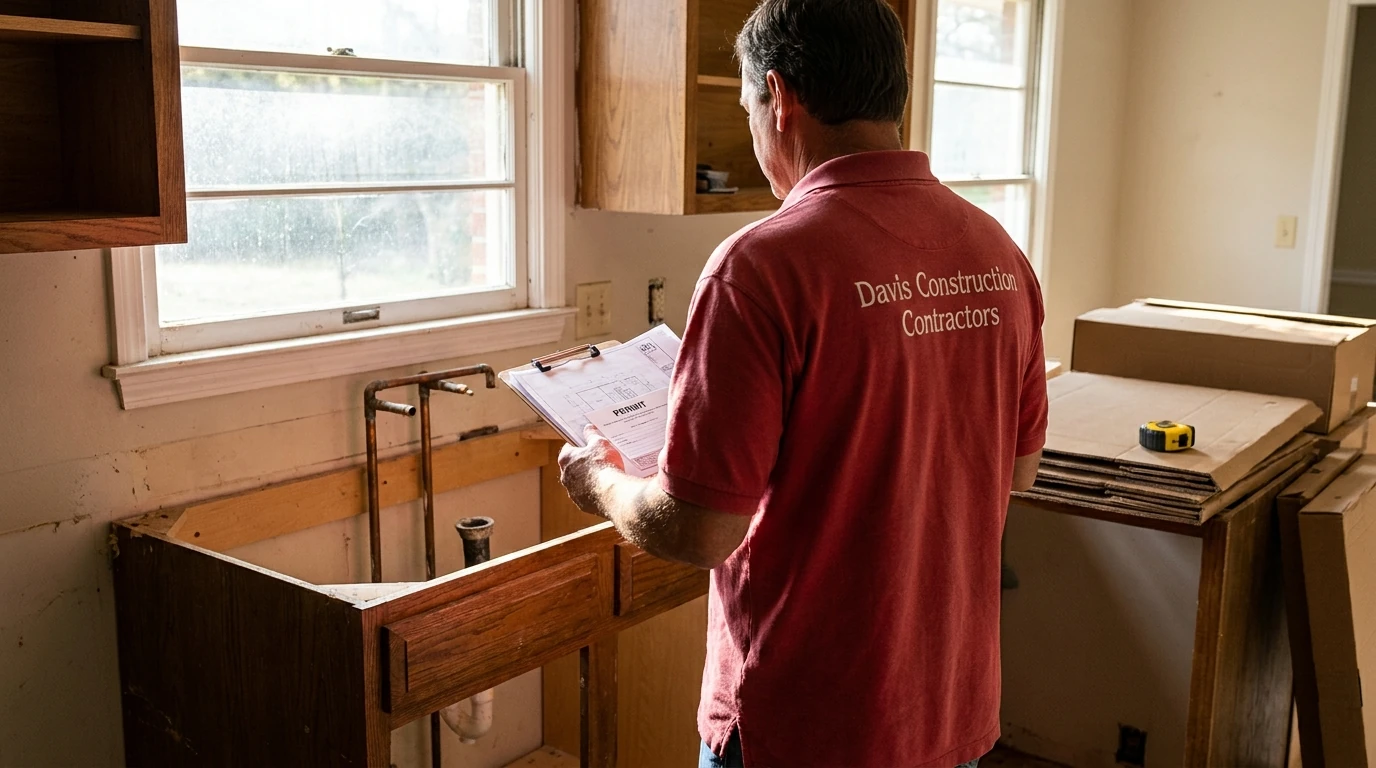
TL;DR: In Madison, Huntsville, and unincorporated Limestone County, a kitchen remodel needs a permit whenever you move plumbing, add or relocate electrical circuits, run new gas lines, or touch a load-bearing wall. Swapping cabinets, countertops, backsplash tile, or appliances in the same footprint usually does not require one. Your contractor, not you, should be the one pulling the permit, and it should be listed as a line item in your written scope before work starts.
If you’re pricing out new cabinets and quartz counters for a kitchen in Old Town Madison or Bradford Creek, and somewhere between tile samples and appliance quotes a contractor mentions “we’ll need to pull a permit for that,” you want a straight answer before you sign anything. The rules are not complicated once you know the trigger line: cosmetic work rarely needs a permit, anything touching plumbing, gas, wiring, or structure almost always does.
Do I need a permit to remodel a kitchen in Madison, AL?
Yes, if your remodel involves moving or adding plumbing lines, electrical circuits, gas piping, or structural changes, you need a permit from the City of Madison’s building inspections office, or from Limestone County’s permitting office if your home sits outside city limits. A straight cosmetic refresh, new cabinet boxes and countertops in the exact same locations as the old ones, typically does not.
The deciding factor is never the dollar amount of the project. A $60,000 kitchen that keeps every sink, outlet, and gas line exactly where it was can, in some cases, need less paperwork than a $12,000 kitchen that relocates the sink four feet to make room for a peninsula. Alabama’s building departments follow the International Residential Code, adopted statewide through the International Code Council, and that code ties the permit requirement to the type of work, not the budget.
Which parts of a kitchen remodel actually require a permit?
Moving plumbing, adding or upgrading electrical circuits, running new gas lines, and altering load-bearing walls are the four triggers that require a permit in almost every case. Everything else in a typical remodel is usually exempt.
Here is the practical breakdown we walk clients through on nearly every remodel:
- Plumbing - Relocating a sink, adding a second sink or a pot-filler, or rerouting supply and drain lines needs a plumbing permit. Reinstalling a faucet in the same spot with the same lines does not.
- Electrical - New circuits for a range, microwave, disposal, or island outlets, plus any subpanel work, need an electrical permit. Alabama’s electrical code also requires GFCI and, in many kitchens now, AFCI protection on new circuits, per the National Electrical Code. Swapping a light fixture on an existing switched circuit usually does not.
- Gas - Moving a gas line for a range or adding a gas line where there wasn’t one before always needs a permit. Gas work also usually requires inspection before the wall or floor gets closed up.
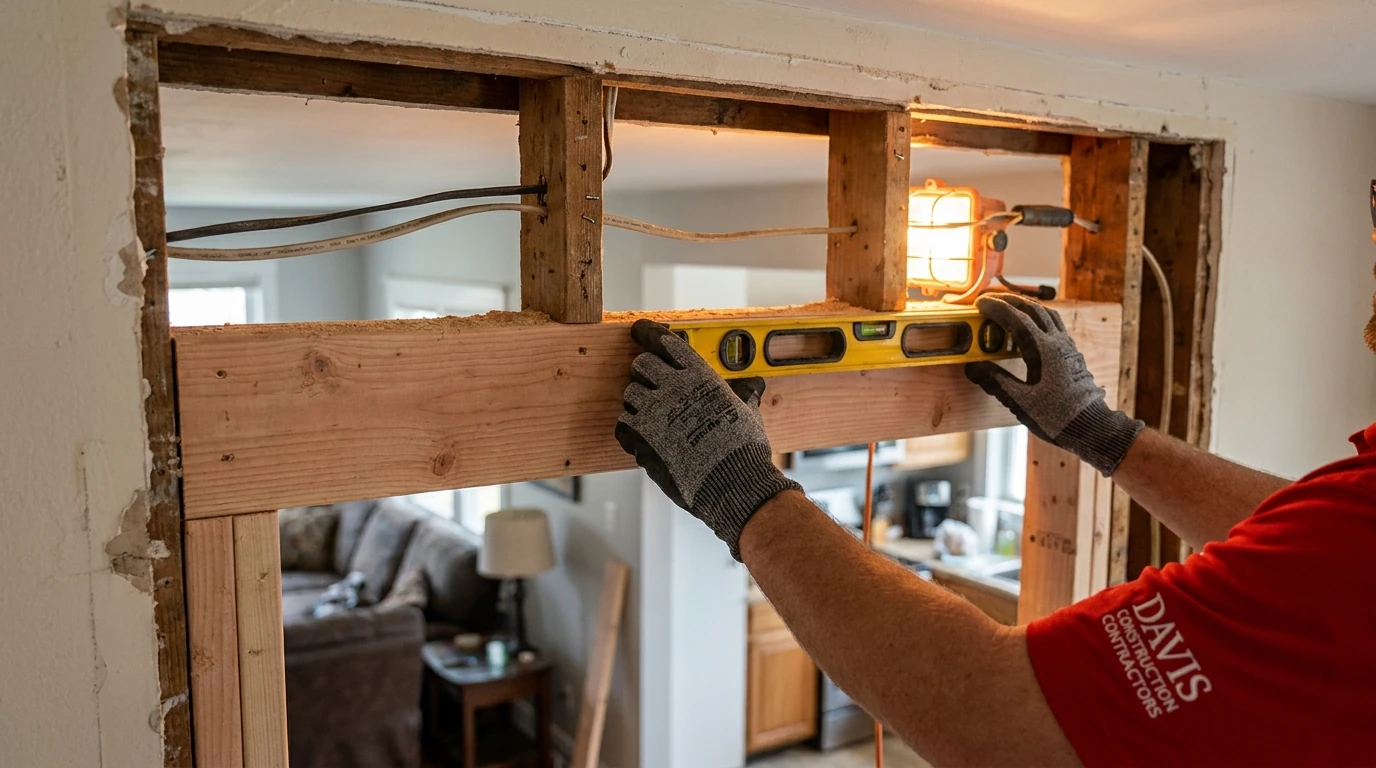
- Structural - Removing or altering a load-bearing wall to open a kitchen to a living room needs a building permit and, in most cases, engineered plans for the new header. A wall that’s purely decorative, non-load-bearing, has a lighter path.
- Mechanical - Adding or relocating a range hood vent through the roof or an exterior wall typically needs a mechanical permit, especially for higher-CFM commercial-style hoods.
Cosmetic swaps, new cabinet boxes, countertops, tile backsplash, paint, flooring in the same footprint, generally fall outside permit requirements because nothing behind the wall is changing. If you’re weighing the scope of the whole job, our home remodeling page walks through how these pieces typically get sequenced.
What happens if you remodel without a permit?
Skipping a required permit doesn’t usually stop the work in the moment, but it creates real problems later: a failed home inspection at resale, a denied insurance claim if a fire or leak traces back to unpermitted electrical or plumbing, and in some cases a stop-work order if the city finds out mid-project. None of this is likely to end in a dramatic confrontation, but it does show up at the worst possible time, which is usually when you’re trying to sell the house.
Appraisers and home inspectors in Madison and Huntsville routinely flag kitchens with new gas ranges, moved plumbing, or added circuits that show no matching permit record. Buyers’ agents ask about it. Some lenders will hold up financing until it’s resolved, which usually means opening the wall back up for a retroactive inspection, an expense nobody budgets for. Homeowners insurance carriers can also decline a claim tied to unpermitted electrical or plumbing work, which is a bigger risk than most people weigh going in.
This isn’t a reason to panic about a project already underway, it’s a reason to confirm the permit status in writing before the drywall goes back up. If you’re not sure whether mold or moisture turned up behind an old cabinet run during demo, our post on what happens when mold turns up during a renovation covers that specific situation.
Who pulls the permit, you or the contractor?
The contractor should pull the permit, not the homeowner, in almost every case. A licensed contractor pulling the permit means the inspections are tied to their license, which is exactly the accountability you want on plumbing, gas, and electrical work.
Homeowners can legally pull owner-permits in Alabama for their own primary residence, but doing so shifts inspection liability, scheduling, and code compliance onto you personally, with no contractor license standing behind the work. It also complicates things if you sell the house within a few years, since the permit history follows the address either way. When you’re comparing bids, ask each contractor directly whether the permit fee is already included in their quote or billed separately. It should be one line item, not a surprise add-on halfway through the job. The NAHB publishes general consumer guidance on this exact question if you want a second source.
Before you sign a contract, get the permit plan in writing: which permits are needed, who’s pulling them, and roughly how long the city or county’s review takes. In Madison and Huntsville, straightforward kitchen electrical and plumbing permits typically clear in a matter of days once submitted; jobs that touch a load-bearing wall or need engineered plans take longer because of the additional review. Ask for that timeline up front so it’s built into your project schedule instead of discovered mid-demo. If you want the fuller picture on how the paperwork fits into a whole remodel timeline, our general permit guide and our kitchen remodel cost breakdown cover the adjacent questions homeowners usually ask next.
A remodel that touches plumbing, gas, or wiring is worth doing right the first time, with the right permits pulled by the people doing the work. That’s the difference between a kitchen that adds real value and one that creates a headache at closing.
About Davis Construction Contractors
Davis Construction Contractors is a family-owned, licensed and insured remodeling contractor serving Madison, Huntsville, Athens, and the surrounding Limestone County area since 2008. Their crews handle kitchen and bath remodels, additions, and full home renovations, coordinating permits and inspections as part of the standard project scope rather than an afterthought.