
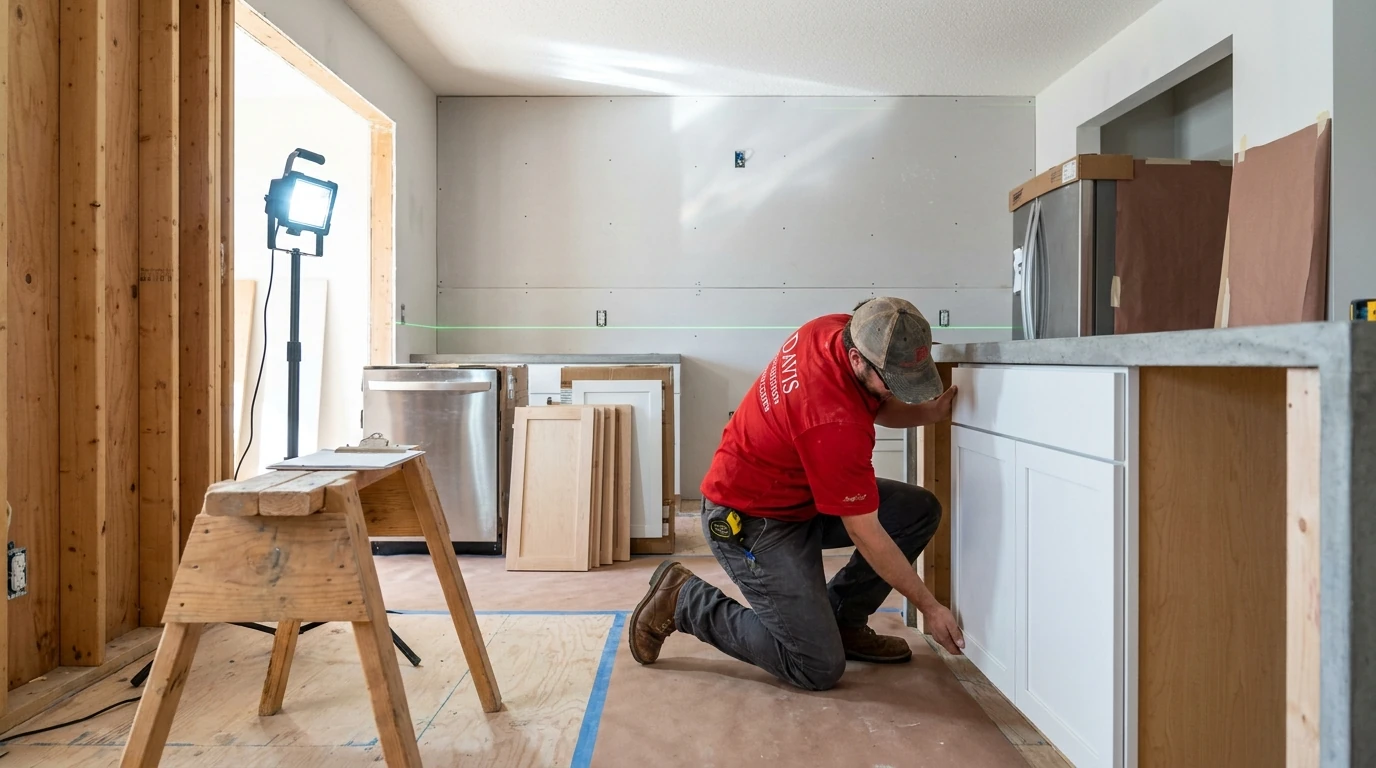
What a Kitchen Remodel Actually Costs
Most kitchen remodels in the Madison area land somewhere between a light refresh and a full gut, and the price swings hard depending on which one you’re doing. A cosmetic update (new countertops, a backsplash, paint, maybe new hardware) can run a few thousand dollars. A mid-range remodel that replaces cabinets, countertops, flooring, and appliances while keeping the existing layout typically falls in the range most homeowners picture when they say “kitchen remodel.” A full gut-and-reconfigure, where walls move, plumbing and electrical get relocated, and everything is new, costs significantly more because you’re paying for structural and system changes on top of finishes. The honest answer is that there’s no single number, but there is a predictable way to estimate yours once you know which category you’re in.
The Three Budget Tiers
Think of kitchen remodels in three tiers rather than one price tag.
- Refresh: Keep the existing cabinet boxes and layout. Reface or repaint cabinets, swap countertops, update the backsplash and lighting, repaint. No plumbing or electrical moves. This is the least expensive tier and the fastest to complete.
- Mid-range replacement: New cabinets (often semi-custom or stock), new countertops, new flooring, new appliances, updated lighting. The footprint stays the same, so plumbing and electrical lines don’t move, which keeps labor costs down even though material costs go up.
- Full renovation: Walls come down, the island moves, plumbing and gas lines get rerouted, and electrical is reworked for new appliance locations and lighting. This tier involves permits, inspections, and sometimes structural work if a load-bearing wall is involved. It costs the most because you’re paying for both the visible finishes and the invisible systems behind them.
Most homeowners researching “how much does a kitchen remodel cost” are picturing the mid-range tier, which is why online estimates feel so inconsistent. One article is quoting a refresh, another is quoting a full gut, and neither tells you which.
Where the Money Actually Goes
Cabinets are almost always the single biggest line item in a kitchen remodel budget, often accounting for close to a third of the total. Countertops and installation are next, followed by appliances if you’re replacing them as part of the project. Labor, including plumbing, electrical, and general contracting oversight, typically makes up the rest. Flooring, lighting, and backsplash tend to get the smallest share of the total budget, even though they’re often what homeowners notice first.
This matters when you’re trying to trim a budget. Cutting corners on cabinets to save money usually costs more in the long run, since poorly built boxes warp, doors sag, and drawers stick within a few years. Countertops and labor are where skilled work actually shows, and underpaying there tends to show up as uneven seams, poor leveling, or plumbing connections that leak down the road.
What Drives Your Number Up or Down
A few specific factors move your estimate more than people expect:
- Moving plumbing or gas lines. Relocating a sink, dishwasher, or gas range even a few feet means new supply lines, drain lines, and sometimes a permit inspection. This is one of the fastest ways a “simple” remodel turns into a bigger job.
- Load-bearing walls. Opening a kitchen to a dining room or living space often means a structural beam is needed to replace a wall that was holding weight. That’s an engineering and framing cost most online calculators don’t account for.
- Cabinet type. Stock cabinets, semi-custom, and fully custom cabinets can vary widely in price for the exact same layout. Semi-custom is the middle ground most homeowners land on because it balances fit and cost.
- Countertop material. Laminate, butcher block, quartz, and natural stone all sit at different price points, and quartz or granite installation requires templating and professional fabrication that adds to labor cost.
- Older homes. Homes built before the 1980s in established Madison neighborhoods often have outdated electrical panels, galvanized plumbing, or wiring that doesn’t meet current code. Bringing those up to standard during a remodel is a real cost, not an optional upgrade, if the work is permitted.
How to Get a Realistic Number for Your Kitchen
Online calculators are useful for a ballpark, but they can’t see your kitchen. The only way to get a number you can actually budget against is a walkthrough with a contractor who can look at your layout, your cabinets, your plumbing and electrical, and your finish preferences, and price the project as it actually exists. A written estimate should break the project into categories (cabinets, countertops, appliances, labor, permits) rather than giving you one lump figure, so you can see where you have room to adjust if the total comes in higher than expected.
If you’re early in the research phase, it’s worth getting a quote even if you’re not ready to start. It costs you nothing to know the real range for your specific kitchen, and it gives you a baseline to compare against as you shop materials and appliances.
Planning Your Budget Before You Start
Once you have a realistic number, build in a contingency of roughly 10 to 15 percent for the unexpected. Older homes especially tend to reveal surprises once cabinets come out and walls open up, things like water damage behind a sink, undersized electrical, or plumbing that doesn’t match current code. Budgeting for that upfront means a surprise doesn’t derail the whole project or force you into cutting a finish you actually wanted.
It also helps to decide early which tier you’re in. If you want new cabinets, countertops, and appliances but don’t want to move plumbing or walls, say that clearly when you request a quote. That one detail alone can be the difference between a straightforward mid-range remodel and a full renovation timeline and budget.
A kitchen remodel is one of the larger investments most homeowners make in their house, and getting the budget right from the start avoids the two most common outcomes of winging it: running out of money halfway through, or settling for finishes you didn’t actually want. Davis Construction Contractors handles kitchen remodeling and broader home remodeling projects in the Madison area and can walk your specific kitchen to give you a category-by-category estimate before you commit to anything. Call (256) 771-0326 to set up a time to talk through your space and your goals.