
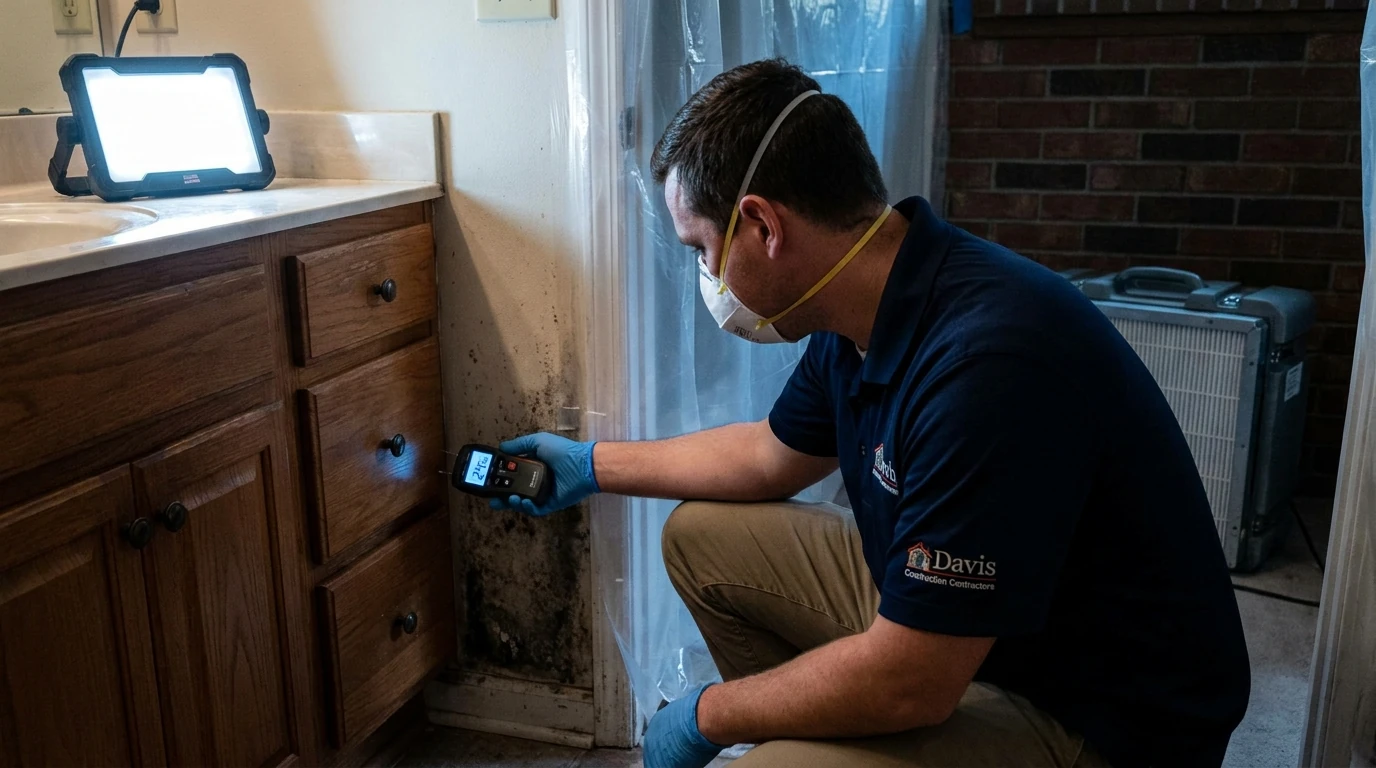
TL;DR: Homeowners insurance covers mold remediation when the mold grew from a sudden, covered water event, like a burst pipe or an appliance leak. It typically does not cover mold from slow leaks, poor ventilation, or long-term moisture problems. In Huntsville, where summer humidity routinely pushes past 80%, the line between “sudden” and “gradual” matters a lot. Read your policy’s mold sublimit, document everything before cleanup starts, and report the claim promptly.
You noticed dark staining behind your bathroom vanity or caught a musty smell coming from the crawl space under your Hampton Cove home. Now you’re staring at a remediation estimate and wondering whether your insurance policy will cover any of it. The answer depends on one question your insurer will ask first: what caused the moisture that fed the mold? If that cause is covered, the mold usually is too, up to a point.
Is Mold Covered by Homeowners Insurance?
Mold is covered by homeowners insurance when it is a direct result of a covered peril, most commonly sudden and accidental water damage. If a pipe bursts in your wall and mold grows within days because the water wasn’t found immediately, that mold claim typically follows the water damage claim. What insurers will not pay for is mold that developed from a slow, ongoing moisture problem that a homeowner could have caught and fixed.
The Insurance Information Institute notes that standard HO-3 policies cover sudden and accidental discharge of water but exclude damage from continuous or repeated seepage. That distinction is the hinge point for almost every mold claim.
A few examples of how this plays out:
- Covered: A supply line to your washing machine fails overnight. Water soaks the subfloor. Mold appears within a week. You file a water damage claim; mold remediation is included.
- Not covered: A slow drip under your kitchen sink has been staining the cabinet floor for months. Mold is found during a remodel. The insurer calls it gradual deterioration and denies the claim.
- Gray area: A roof leak after a hail storm. If the storm is a covered peril and you reported the damage promptly, the resulting mold may be covered. If you waited months to address a known leak, the insurer may argue you failed to mitigate.
What Does “Sudden vs. Gradual” Actually Mean to Your Insurer?
Insurers define “sudden” as an event that happened without warning and was addressed as soon as it was discovered. “Gradual” means the damage built up over time, weeks, months, or years, in a way the homeowner should have noticed.
In practice, adjusters look for physical evidence. A waterline on drywall that stops at one height suggests a single event. Staining that layers up the wall in multiple rings suggests repeated wetting over time. Mold that has penetrated deep into framing or spread across a large area often signals a longer-running moisture source, which works against a coverage argument.
Huntsville’s older neighborhoods present a specific challenge here. Homes in the Twickenham Historic District and Five Points often have aging masonry, original plaster walls, and older plumbing that can weep moisture slowly for years before anyone notices. If you own one of these homes, a proactive moisture inspection before a problem shows up is worth far more than trying to argue coverage after the fact.
For newer Hampton Cove or South Huntsville homes, the more common culprits are HVAC condensate line failures, refrigerator ice-maker lines, and water heater leaks, all of which can qualify as sudden events if caught and reported quickly. See our post on how quickly mold grows after water damage to understand why the first 24-72 hours matter so much.
What Mold Exclusions Should You Look for in Your Policy?
Most standard homeowners policies contain explicit mold exclusions or sublimits that cap what they’ll pay. Common exclusions include:
- Gradual damage exclusion: Denies claims for damage that developed slowly, including mold from long-term moisture.
- Flood exclusion: Standard HO-3 policies do not cover flooding. If your Huntsville home took on water during a heavy rain event and mold followed, that claim goes to a separate NFIP flood policy, not your homeowners policy.
- Neglect exclusion: If you knew about a water problem and didn’t fix it, the insurer can deny the mold claim on grounds of neglect.
- Mold sublimit: Many policies that do cover mold cap the payout, often at $5,000 to $10,000, even when the full remediation cost runs higher. Check your declarations page for a line item labeled “fungi, wet or dry rot, or bacteria.”
If your policy has a low sublimit and you’re in a high-humidity area like Huntsville, it’s worth calling your agent to ask about a mold endorsement that raises the cap. The premium increase is usually modest compared to the out-of-pocket exposure.
How Do You Document Mold for an Insurance Claim?
Documentation before cleanup starts is the single most important thing you can do to protect a mold claim. Once the mold is gone, so is most of your evidence.
Step 1: Photograph everything. Wide shots showing the affected room, close-up shots of the mold growth, and photos of any water source you can identify (the failed pipe, the wet insulation, the damaged roof area). Timestamp the photos or use your phone’s automatic metadata.
Step 2: Do not start remediation before the adjuster visits. Notify your insurer as soon as you discover the mold. Ask when an adjuster can inspect. If the mold is actively spreading or there’s a health concern, document that in writing when you call, some insurers will authorize emergency containment before the full inspection.
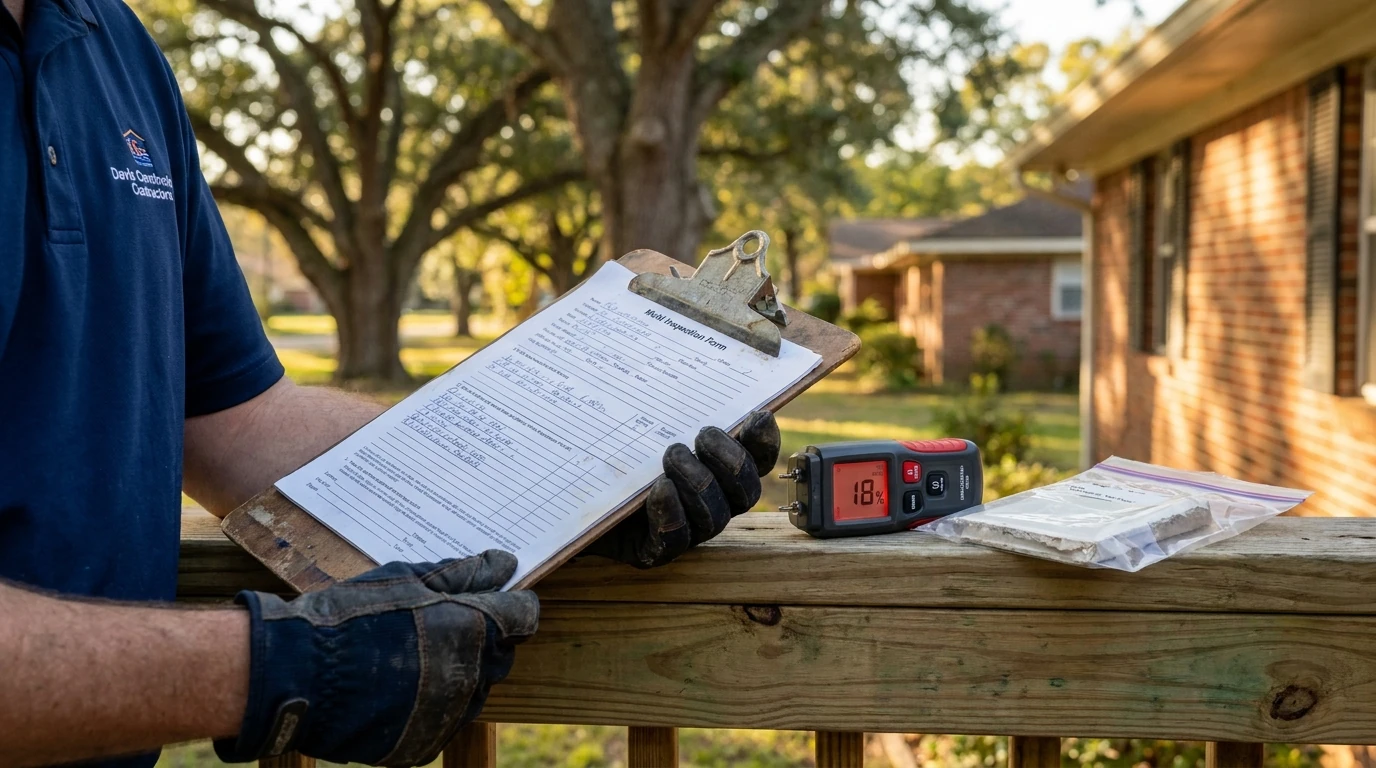
Step 3: Get a written mold inspection report. A third-party mold inspector can document the species present, the extent of growth, and the likely moisture source. This report becomes part of your claim file and can support your argument that the mold is recent and tied to a specific event. See our mold inspection cost guide for Huntsville for what to expect on pricing.
Step 4: Save all receipts and communications. Every call to your insurer, every email, every estimate from a remediation contractor. If the claim gets disputed, a paper trail showing you acted promptly is your strongest argument.
Step 5: Keep a sample of the damaged material if possible. A piece of mold-covered drywall in a sealed bag can be tested later if the adjuster questions the source or timeline.
For a broader look at how water damage claims work before mold becomes the issue, our post on homeowners insurance and water damage covers the underlying claim process in detail.
How Do You File a Mold Claim That Actually Gets Paid?
Filing a mold claim successfully comes down to connecting the mold to a covered water event and showing you acted quickly once you discovered the problem.
Call your insurer’s claims line, not your agent’s office, as soon as you identify the mold. Agents handle policy questions; claims departments handle actual losses. When you call, be specific: “I discovered mold in my bathroom wall on [date]. It appears to be connected to a supply line failure I found the same day.” Vague descriptions give adjusters room to categorize the damage as gradual.
Ask the adjuster directly: “Is this claim being evaluated under the sudden and accidental water damage coverage or is it being treated as a mold-specific claim?” The answer tells you which sublimit applies and whether you need to push back.
If the claim is denied, you have the right to request a written denial with the specific policy language cited. Many denials are appealed successfully when a homeowner provides additional documentation, particularly a professional mold inspection report that establishes the timeline.
If you’re navigating a claim in Huntsville and need remediation work done quickly, Davis Construction Contractors handles mold remediation and water damage restoration across the area. We can provide the written scope and documentation your insurer will ask for, and we work with homeowners during the claims process so the paperwork doesn’t slow down the repair.
Schedule a mold assessment by calling (256) 771-0326, Monday through Friday, 8:00 AM to 5:00 PM.
About Davis Construction Contractors
Davis Construction Contractors is a licensed and insured restoration and construction company serving Huntsville, Madison, Athens, and surrounding North Alabama communities since 2008. Family-owned and operated, their crews handle mold remediation, water damage restoration, storm damage repair, roofing, and full home remodeling. Davis Construction Contractors provides written project scopes and works alongside homeowners during the insurance claims process.