
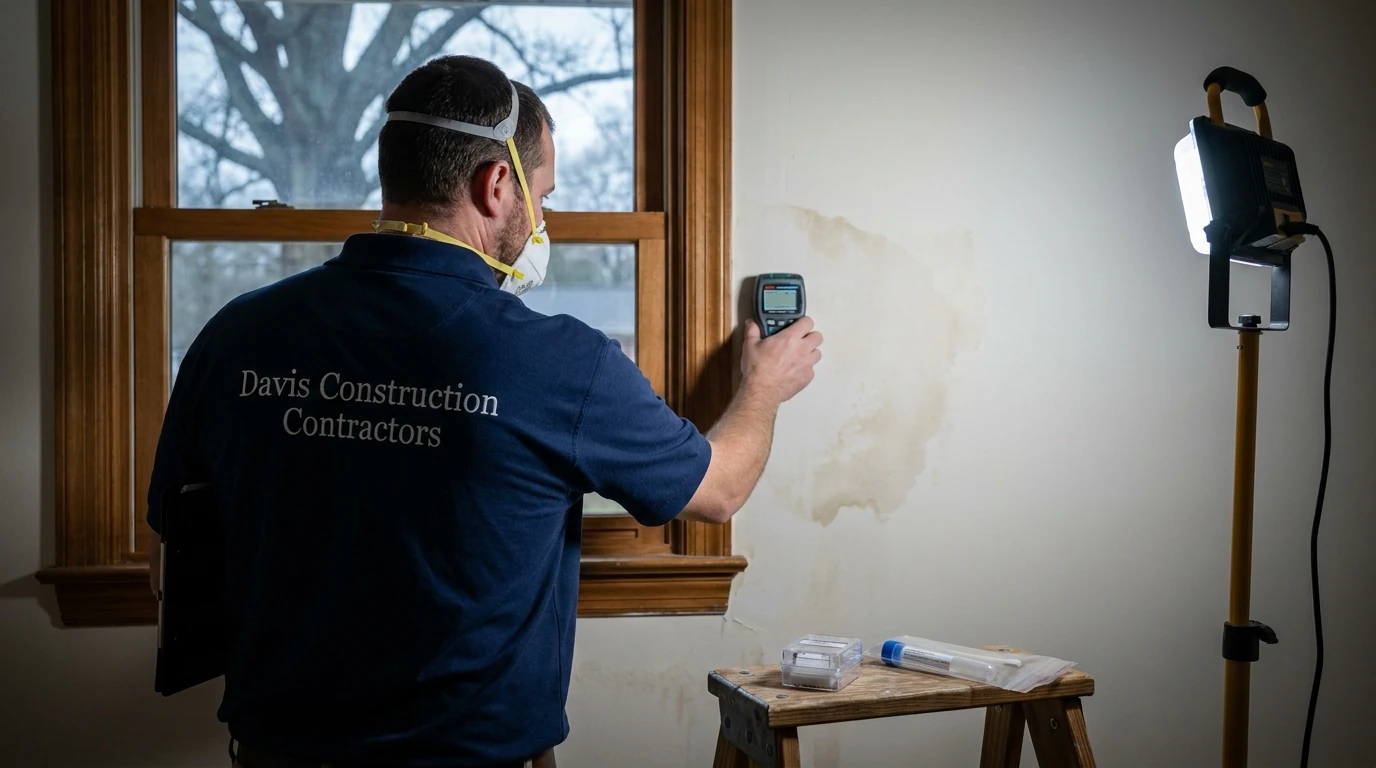
TL;DR: A professional mold inspection in Huntsville, AL runs $200–$600 for most homes. Basic visual inspections sit at the low end; air sampling and surface testing push the price higher. If a real estate transaction, insurance claim, or visible water damage is involved, the inspection almost always pays for itself by clarifying whether remediation is actually needed and how extensive it should be.
If you’ve noticed a musty smell in your South Huntsville ranch or spotted dark staining near a window in your Twickenham-area home and you’re trying to figure out what a mold inspection will actually cost before you call anyone, this breakdown is for you. Huntsville’s humidity and the region’s older housing stock create real mold risk, and the pricing for inspections varies enough that it’s worth understanding what you’re paying for before you book.
How much does a mold inspection cost in Huntsville?
A mold inspection in Huntsville, AL typically costs between $200 and $600 for a standard single-family home. Visual-only inspections (no lab samples) run $200–$300. Inspections that include air sampling or surface swab testing generally run $350–$600, depending on how many samples are collected and sent to a third-party lab.
Here’s how the cost breaks down by what’s included:
- Visual inspection only: $200–$300. An inspector walks the home, checks high-risk areas (attic, crawl space, bathrooms, HVAC, basement if applicable), and documents visible mold or moisture indicators. No lab samples.
- Visual + air sampling: $350–$500. Air cassettes are collected from 2–4 locations inside the home plus one outdoor control sample. Lab analysis adds $30–$75 per sample depending on the turnaround time you choose.
- Visual + air sampling + surface swabs: $450–$600+. Surface swabs or tape-lift samples are added when a specific stained area needs species identification. Each swab adds roughly $25–$50 in lab fees.
- Crawl space or attic add-on: $75–$150 extra. Tight spaces take more time and specialized equipment. Many Huntsville-area homes built in the 1960s–1980s have unconditioned crawl spaces that are high-probability mold zones.
For larger homes over 3,000 square feet, or for commercial properties near the Bridge Street Town Centre or Research Park Boulevard corridor, expect quotes to start higher, $500–$900 is common for commercial inspections.
What’s the difference between a mold inspection and mold testing?
Mold inspection and mold testing are two different things, though they’re often sold together. A mold inspection is the physical walkthrough, a trained inspector evaluates moisture levels with a pin or pinless moisture meter, looks for visible growth, checks ventilation, and identifies conditions that support mold growth. Testing is the lab component: air samples or surface samples are collected and sent to a certified laboratory to identify what species are present and at what concentration.
You can have an inspection without testing. You cannot meaningfully interpret a mold test without an inspection, the sample locations need to be chosen by someone who has assessed the property, or the data is nearly useless.
For most homeowners dealing with a suspected moisture problem, a visual inspection plus 2–3 air samples is the right starting point. If the inspector finds visible mold, you may not need testing at all, the remediation scope can often be determined visually, and the EPA’s mold remediation guidance notes that testing is generally not required before remediation when visible mold is present.
When is a mold inspection worth the cost?
A mold inspection is worth the cost in four specific situations.
Before buying a home. Older homes in the Twickenham Historic District and Five Points neighborhoods often have aging plumbing, older rooflines, and masonry that holds moisture differently than newer construction. A mold inspection during due diligence can surface problems a general home inspector might flag but not quantify. If mold is found, you have a negotiating point; if it’s clean, you have documentation.
After water damage. Mold can begin colonizing wet building materials within 24–48 hours of a water event, as detailed in our post on how quickly mold grows after water damage. If your home had a roof leak, burst pipe, or appliance failure and wasn’t dried out quickly, an inspection tells you whether remediation is necessary before you close up walls.
When you smell mold but can’t find it. Musty odors without visible growth suggest mold is behind drywall, under flooring, or in HVAC ductwork. Air sampling can confirm or rule out elevated spore counts without tearing into walls unnecessarily.
For insurance or legal documentation. If you’re filing a water damage claim or have a dispute with a landlord or contractor, a third-party inspection report with lab results creates a paper trail that a visual assessment alone doesn’t.
If you’re just curious after seeing a small patch of bathroom grout discoloration, an inspection is probably overkill. Our post on black mold vs. regular mold can help you assess whether what you’re seeing is likely a surface issue or something that warrants a professional look.
What does the mold inspection process actually look like?
A standard residential mold inspection in the Huntsville area takes 1.5–3 hours depending on home size. Here’s what to expect.
Step 1: Pre-inspection interview (10–15 minutes). The inspector asks about known water events, HVAC history, any musty odors, and whether anyone in the home has had unexplained respiratory symptoms. This shapes where they focus.
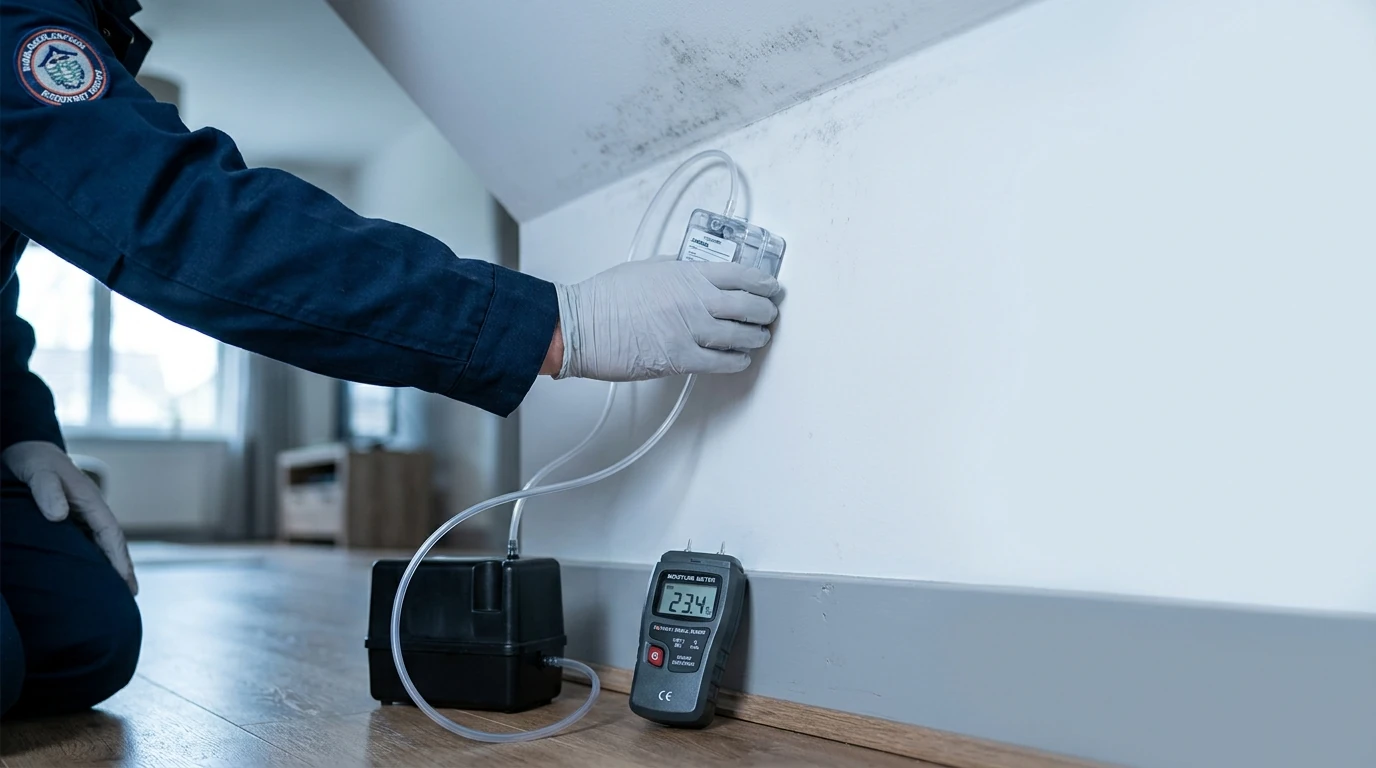
Step 2: Moisture mapping. Using a non-invasive moisture meter, the inspector checks walls, ceilings, and floors in bathrooms, kitchens, laundry rooms, and any area near the roofline or exterior walls. Readings above 16–20% moisture content in wood or drywall indicate active moisture intrusion.
Step 3: Visual assessment of high-risk zones. Attic (checking for roof deck staining and inadequate ventilation), crawl space (vapor barrier condition, standing water, wood rot), HVAC air handler and return air plenum, and any previously water-damaged areas.
Step 4: Air and/or surface sampling (if included). Air cassettes are set up on a calibrated pump for a timed sample, typically 5–10 minutes per location. Outdoor control sample is always collected for comparison. Surface swabs are taken from any visibly stained areas.
Step 5: Lab submission and report. Samples go to an accredited third-party lab. Standard turnaround is 3–5 business days; rush turnaround (24–48 hours) costs more. The final report includes moisture readings, photos, sample results, and a written assessment of conditions and recommended next steps.
The inspector you hire should be independent from any remediation company. An inspector who also sells remediation has a financial incentive to find problems. Ask directly: do they perform remediation, or do they refer out?
What should you do after getting the inspection results?
If the inspection comes back clean, you have documentation and peace of mind. Keep the report.
If the inspection identifies elevated spore counts or visible mold, the report should include a scope of work recommendation. That scope is what a remediation contractor bids from. Without it, you’re comparing bids that may cover very different amounts of work.
For most residential mold issues in Huntsville, remediation involves containment of the affected area, HEPA vacuuming, removal of contaminated materials (drywall, insulation, wood framing if affected), antimicrobial treatment, and post-remediation clearance testing to confirm the work is complete. Our mold remediation service page explains what that process looks like and what’s included in a professional scope.
If the moisture source hasn’t been fixed, remediation is temporary. The inspection report should identify the moisture entry point; that has to be addressed first, whether it’s a roof repair, plumbing fix, or crawl space encapsulation.
If you’re in the Huntsville area and want to schedule an inspection or get a remediation estimate after receiving inspection results, Davis Construction Contractors works with homeowners across the Huntsville, AL service area and can help you understand what the scope and cost of remediation would look like for your specific situation. Call during business hours at (256) 771-0326 to schedule.
About Davis Construction Contractors
Davis Construction Contractors is a licensed and insured contractor serving Huntsville, Madison, Athens, and the surrounding North Alabama region since 2008. The company is family-owned and handles mold remediation, water damage restoration, storm damage repair, roofing, remodeling, and new construction. For mold and moisture issues, their crews assess the full scope, from the moisture source to the finished repair, so homeowners aren’t managing multiple contractors through a stressful process.