
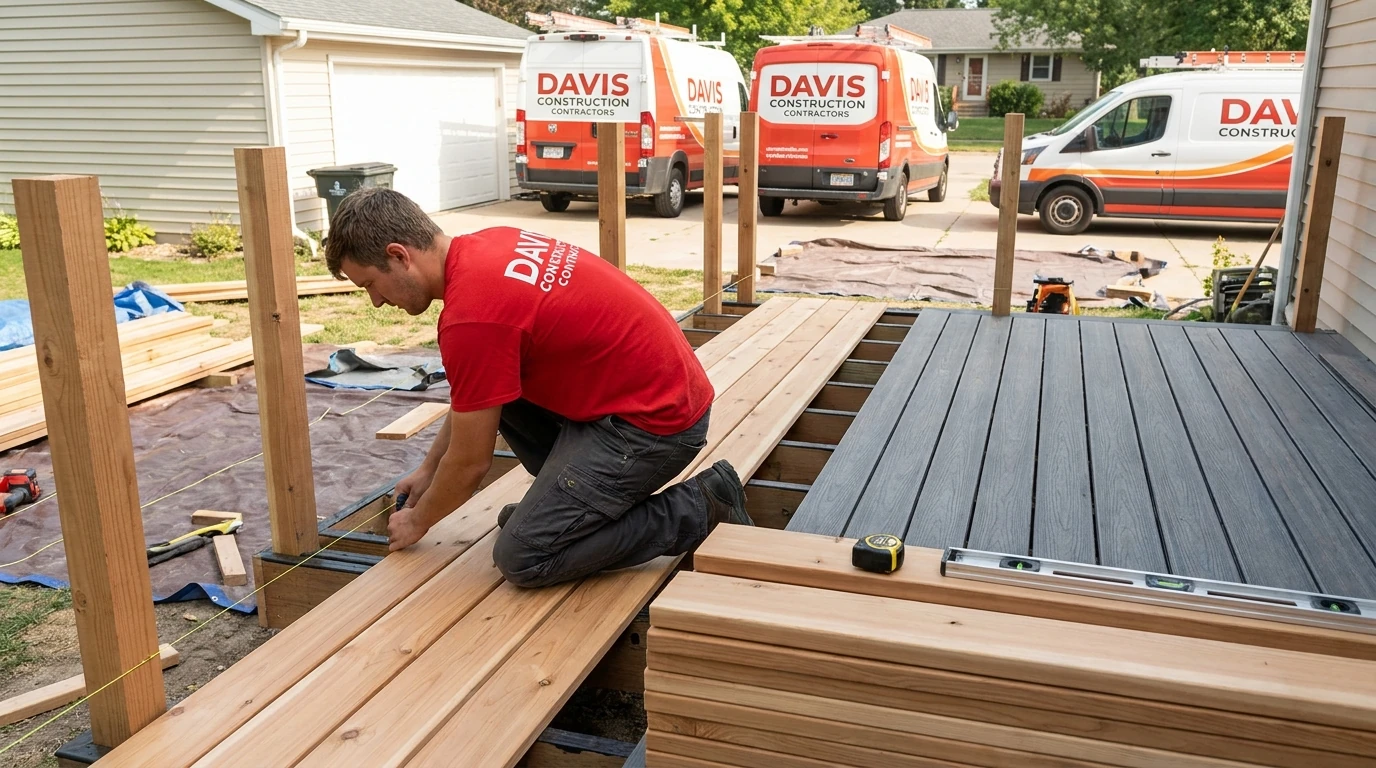
Wood vs Composite Decking: Which Is Right for Your Backyard?
If you want the lowest upfront cost and a traditional look you can refinish or change over time, pressure-treated wood is usually the right call. If you want to spend less time sanding, staining, and replacing boards over the next fifteen years, composite decking is the better fit, even though it costs more to install. The right answer depends less on which material is “better” and more on how much maintenance time you’re willing to trade for a lower price tag today.
Wood Decking: Lower Cost, Higher Upkeep
Pressure-treated pine is the standard choice for new decks across north Alabama because it’s affordable and widely available. A basic pressure-treated deck typically costs less per square foot than composite, which matters if you’re building a large deck or working with a tighter budget.
The tradeoff shows up a year or two after installation. Wood needs to be cleaned and resealed on a regular schedule, usually every one to two years depending on sun exposure and how much the deck gets rained on. Skip that maintenance and you’ll see graying, splintering, and small cracks called checking, especially on boards that face south or west and take the brunt of Alabama’s summer sun. In Madison’s humid summers, wood that isn’t sealed well also holds moisture longer after a storm, which is exactly the environment mold and surface rot need to take hold.
Wood also gives you more flexibility down the road. You can sand out stains, change the stain color, or replace a single damaged board without it looking mismatched the way a discontinued composite color sometimes does.
Composite Decking: Higher Upfront Cost, Lower Maintenance
Composite decking, made from a blend of wood fibers and recycled plastic, costs more per square foot going in, often noticeably more than pressure-treated wood. What you’re paying for is time you don’t have to spend later. Composite doesn’t need staining or sealing, resists splintering, and holds its color more consistently over the years than wood does.
It also handles humidity differently. Because composite doesn’t absorb water the way wood does, it’s less prone to the swelling and warping that shows up on wood decks in the Tennessee Valley’s wet, humid stretches. That said, composite isn’t maintenance-free. It still needs regular washing to prevent mildew film from building up in shaded, low-airflow spots under furniture or planters, and the surface can get hot underfoot in direct summer sun in a way wood doesn’t.
Most composite products come with longer manufacturer warranties than wood ever will, which is worth factoring in if you’re planning to stay in the home for a decade or more.
What Madison’s Climate Does to Each Material
North Alabama’s combination of hot, humid summers, heavy spring rain, and occasional winter ice puts real stress on outdoor structures. A few things worth knowing before you choose:
- Humidity and rot: Wood decking in shaded yards, especially under mature trees common in older Madison neighborhoods, stays damp longer after rain. That accelerates rot at board edges and around fasteners if the wood isn’t sealed on a consistent schedule.
- Termite pressure: Subterranean termites are active across the Tennessee Valley, and untreated or poorly maintained wood near grade is more vulnerable. Pressure-treated lumber resists this better than untreated wood, but ground contact and tight, moist crawlspaces under low decks still deserve attention.
- Sun exposure: Decks facing south or west get the most UV exposure through Alabama summers. Wood fades and dries out faster in these spots; composite holds color better but can run noticeably hotter to the touch.
- Freeze-thaw cycles: Madison doesn’t see deep winter freezes often, but occasional ice and freeze-thaw swings can work moisture into small cracks in aging wood, widening them over a few seasons.
None of this means one material fails and the other doesn’t. It means wood needs more active maintenance to perform well here, and composite trades a higher purchase price for less of that ongoing work.
Questions to Ask Before You Decide
A few practical questions tend to settle this faster than a pros-and-cons list:
- How long do you plan to stay in the home? If it’s five years or less, wood’s lower upfront cost is harder to beat. If it’s ten-plus years, composite’s lower lifetime maintenance often evens out the price difference.
- How much sun does the deck footprint get? Heavily shaded decks are more forgiving for wood since there’s less UV degradation, but they also hold moisture longer, so drainage and airflow underneath matter either way.
- Do you want to refinish or change the look later? Wood gives you that option. Composite color is set for the life of the boards.
- What’s your realistic maintenance schedule? If resealing a deck every year or two genuinely isn’t going to happen, composite protects you from the consequences of skipped maintenance in a way wood won’t.
Structural considerations matter just as much as the decking material itself. Footings, joist spacing, and ledger board attachment need to be sized correctly regardless of what surface material you choose, and that’s where a contractor’s input is worth more than a product comparison. If you’re planning a new deck, pergola, or fence as part of the same backyard project, it’s worth having someone look at the full layout before you commit to materials, since drainage, grading, and sun exposure all affect how either material will hold up.
Getting a Second Opinion Before You Build
Both materials can give you a good-looking, functional deck. The decision usually comes down to budget timing (lower cost now vs. lower cost over time) and how much maintenance you’re actually going to keep up with. If you’re not sure which makes sense for your yard’s sun exposure, drainage, and how long you’re planning to stay in the house, Davis Construction Contractors can walk the site with you and talk through layout, framing, and material options before you commit to a design. Call (256) 771-0326 to set up a time to look at your backyard and get a straight answer on what fits your budget and your maintenance tolerance.