TL;DR: For bathroom water damage in Madison, AL, call a water damage restoration company first, not a plumber or a remodeler. The restoration crew stops the moisture from spreading, pulls the water out, dries the walls and subfloor, and checks for mold before anyone talks about tile or cabinets. If the drying goes well, that’s often the end of the job. If the subfloor or drywall is too far gone, the same company can coordinate the rebuild.
If you just pressed your foot down near the toilet in a 1970s Madison ranch and felt the floor give a little, or you noticed a brown ring spreading across the ceiling below an upstairs shower in Bradford Creek or Liberty Park, you’re trying to figure out one thing fast: who actually handles this. Not who installs the new vanity eventually. Who stops it from getting worse right now.
Who do you call first for bathroom water damage?
Call a water damage restoration company first, before a plumber and well before a remodeling contractor. Restoration crews are set up to respond to active moisture, not scheduled plumbing work, and they bring the equipment to measure and dry a wet wall or subfloor properly.
A plumber can shut off and fix the leaking supply line, drain, or shower pan, and that’s a necessary step. But a plumber isn’t equipped to dry out a saturated subfloor or check whether water has tracked into the wall cavity behind the tub surround. That’s a different skill set, with different equipment: moisture meters, air movers, and dehumidifiers sized to the space.
Davis Construction Contractors handles both ends of this under one roof in Madison, which matters more than it sounds. When the same company that dries the space also plans the rebuild if one’s needed, there’s no gap where a drying report gets handed off to a second company that has to re-inspect everything from scratch.
What does the mitigation and dry-out process actually involve?
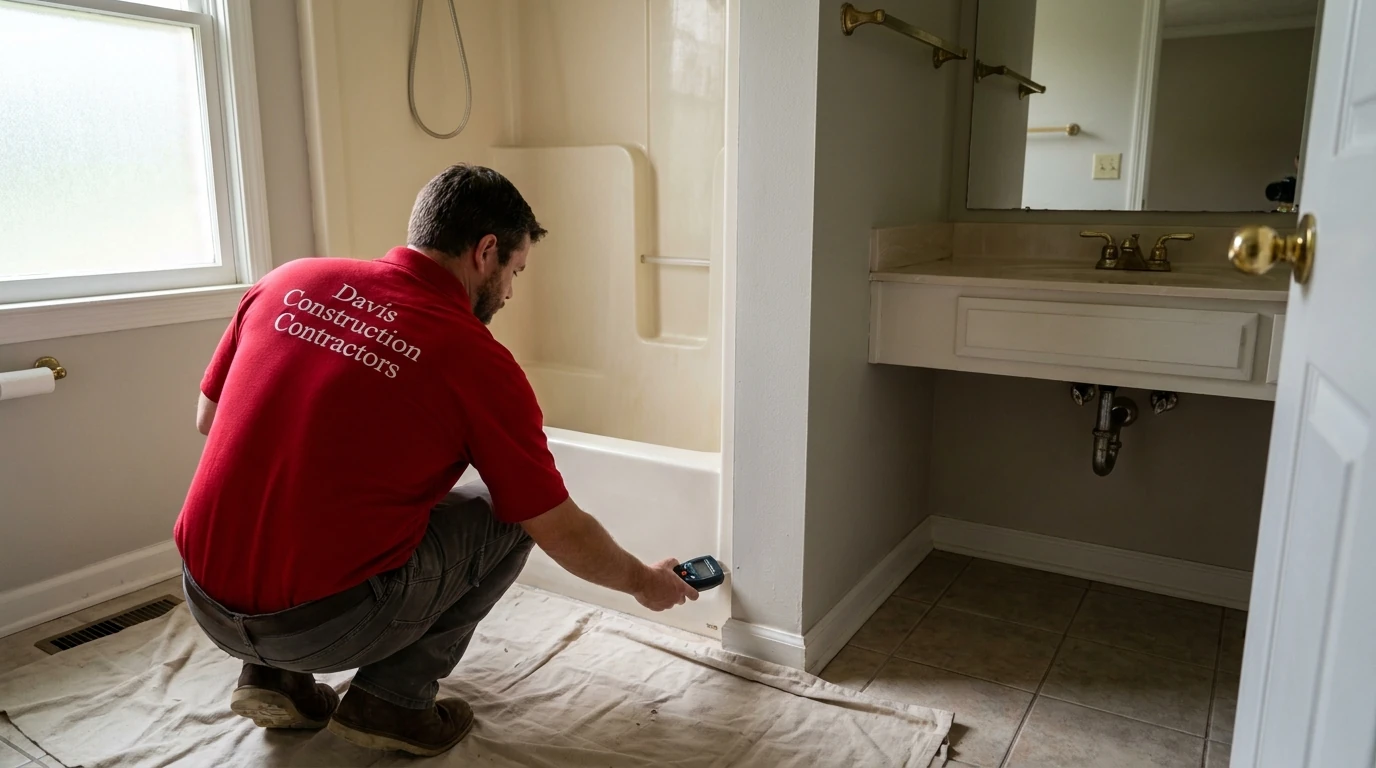
Mitigation starts with stopping the water source and extracting whatever is standing, then mapping how far the moisture has traveled before any drying equipment goes in. A technician uses a moisture meter on the drywall, baseboards, and subfloor around the leak to find the real boundary of the damage, which is almost always wider than the visible stain.
From there the typical sequence looks like this:
- Source control. The leak or overflow is stopped, usually in coordination with a plumber if the source is a supply line, drain, or shower pan.
- Extraction. Any standing water on the floor is pulled out with a wet vac or extraction unit.
- Moisture mapping. Meters check drywall, baseboard, subfloor, and sometimes the ceiling below, to set a drying plan.
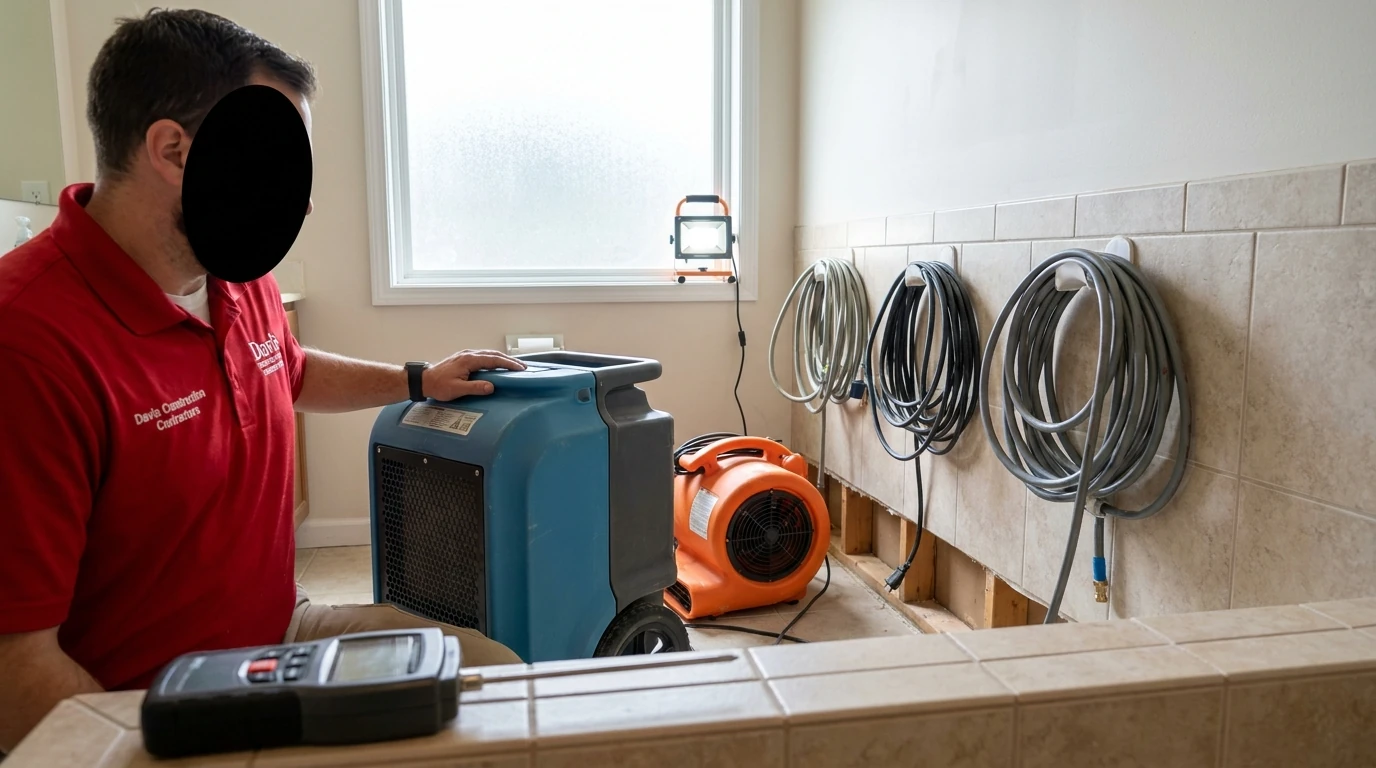
- Controlled drying. Air movers and a dehumidifier run in the space, typically for 2 to 4 days depending on how much material got wet and what it’s made of.
- Daily monitoring. Moisture readings are tracked until the materials return to a normal, dry range, not just until things look dry.
Most bathroom leaks caught early, a slow supply line drip, a shower pan seepage found within a day or two, dry out completely with no demolition needed. That’s the outcome to hope for, and it’s the most common one when the leak is caught before it’s been running for weeks.
Will homeowners insurance cover a shower or bathroom leak?
Most homeowners policies cover sudden and accidental water damage, like a supply line that bursts, but typically exclude damage from a leak that ran slowly for months without being noticed or fixed. The distinction insurers draw is between a sudden event and gradual neglect.
A failed shower pan that’s been seeping for a year and rotted the subfloor underneath is the kind of claim an adjuster will scrutinize closely, sometimes denying it as a maintenance issue rather than a covered loss. A supply line that blew out overnight is a much cleaner claim. Either way, document the damage with photos before any drying work starts, and keep the moisture-mapping report from the restoration crew. Our longer breakdown on what homeowners insurance actually pays for water damage walks through the claim process in more detail.
When does a bathroom actually need a remodel instead of just drying out?
A full rebuild becomes necessary when the subfloor has rotted, the drywall has delaminated, or mold has established itself inside the wall cavity, not just because water touched a surface. Drying alone fixes the vast majority of leaks caught within the first day or two.
Signs that point toward a rebuild rather than a dry-out: a subfloor that feels spongy or visibly sags underfoot, tile that’s come loose because the substrate underneath failed, or a musty smell that persists after drying equipment has run its course. Mold can begin colonizing wet drywall and framing in as little as 24 to 48 hours in Alabama’s humidity, which is why a fast response matters even when the leak looks minor. If mold has already set in, that work needs to be handled through mold remediation before any rebuild framing goes back in, following guidance from the EPA’s mold resource. You can read more on how fast that timeline actually moves in our post on how quickly mold grows after water damage.
When a rebuild is genuinely needed, replacing a rotted subfloor section, retiling a shower, reframing a water-damaged wall, that’s where home remodeling picks up where restoration leaves off. Having one company carry the job from the first moisture reading through the finished tile saves the back-and-forth of bringing in a second contractor who has to start by re-diagnosing what the first company already documented.
If you’re looking at a wet bathroom floor in Madison right now, the next step is simple: get someone out to measure the actual extent of the moisture before deciding anything about demolition, insurance, or a remodel budget. Request a water damage inspection and start with the drying plan, not the design plan.
About Davis Construction Contractors
Davis Construction Contractors is a family-owned, licensed and insured contractor serving Madison and North Alabama since 2008. This post was prepared with input from Heath Davis. The company handles water damage mitigation, mold remediation, and home remodeling under one crew, which means a bathroom leak can go from moisture reading to finished rebuild without changing contractors mid-project. Call Davis Construction Contractors at (256) 771-0326 to schedule an inspection, Monday through Friday.