
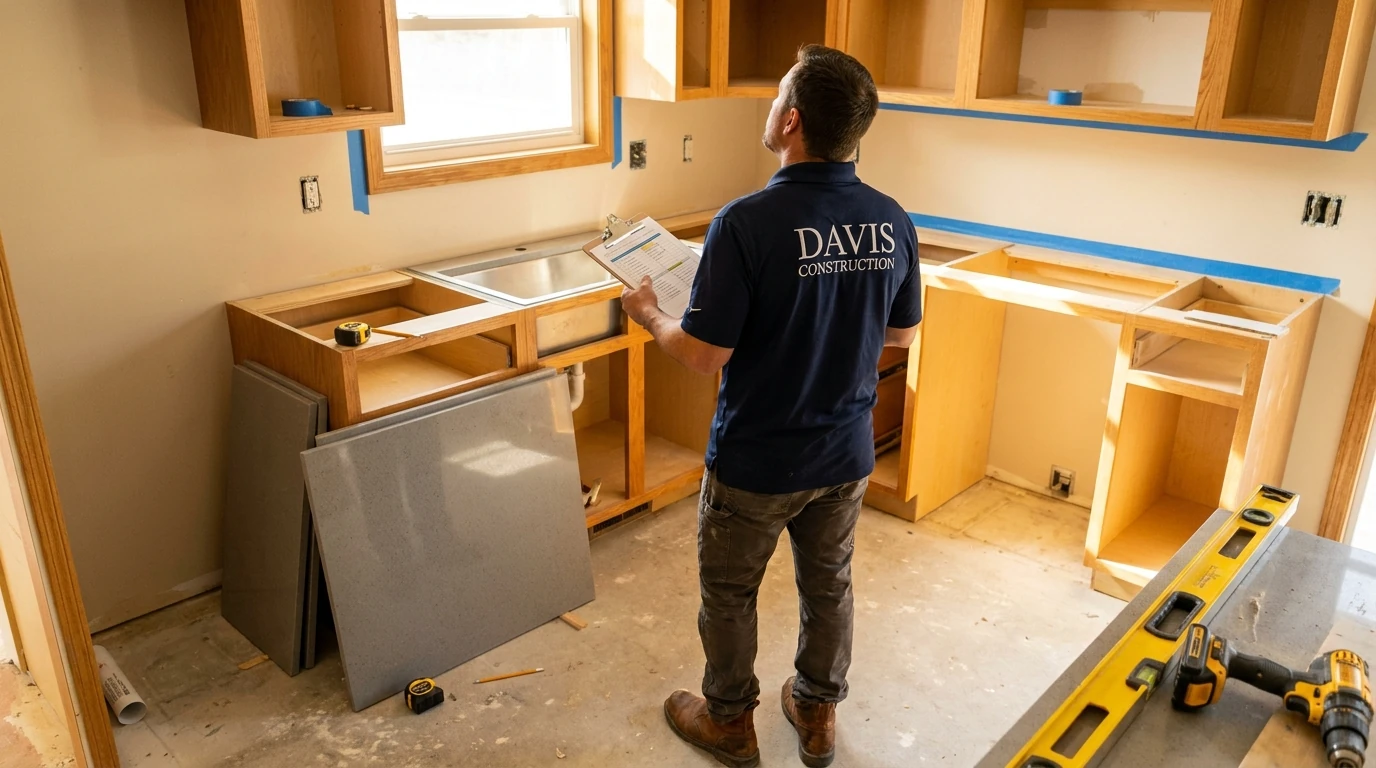
TL;DR: General contractors in Alabama typically charge between 10% and 20% of total project cost, depending on project size, contract type, and complexity. On a $60,000 kitchen remodel, that’s $6,000–$12,000 in GC fees. Smaller projects trend toward the higher end of that range; large custom builds can dip below 10%. The fee covers project management, subcontractor coordination, permits, scheduling, and warranty, not just a signature on a contract.
If you’ve gotten two bids on a remodel and they’re $15,000 apart, the difference usually isn’t one contractor padding their pocket, it’s scope, markup structure, and what each price actually includes. Understanding how general contractors charge is the fastest way to compare bids accurately and avoid surprises mid-project.
How Do General Contractors Charge?
General contractors use two main pricing structures: fixed price (also called lump sum) and cost-plus. Fixed price means you agree on a total number before work starts and the GC absorbs cost overruns. Cost-plus means you pay actual material and labor costs, plus a predetermined fee or percentage on top.
Fixed price works best when the scope is fully defined, a bathroom remodel with finishes selected, a deck with exact dimensions and materials specified. The GC prices the risk into the number, so you pay a slight premium for certainty. Change orders cost extra, and they should, every scope change after signing is new work.
Cost-plus is common on larger projects, custom new construction, or anything where the full scope can’t be pinned down at the start. You see exactly what materials and labor cost, then pay the agreed markup on top. The tradeoff: your final number isn’t locked until the project is done. Cost-plus contracts should always include a guaranteed maximum price (GMP) clause so you have a ceiling.
For most North Alabama homeowners doing a kitchen, bath, or room addition, fixed price is the standard. Cost-plus shows up more often on whole-home renovations and new construction projects where design decisions are still in flux.
What Is a General Contractor’s Markup Percentage?
A GC’s markup typically runs 10–20% of total project cost, though the range is wider in practice. The markup percentage covers overhead (insurance, equipment, office, estimating time) and profit. It does not mean the GC is pocketing 15 cents of every dollar, most of that covers real operating costs.
Here’s how markup typically shifts by project size:
| Project Type | Typical Project Cost | GC Fee Range | Fee Amount |
|---|---|---|---|
| Bathroom remodel | $15,000–$35,000 | 15–20% | $2,250–$7,000 |
| Kitchen remodel | $40,000–$80,000 | 12–18% | $4,800–$14,400 |
| Room addition | $50,000–$120,000 | 12–18% | $6,000–$21,600 |
| Whole-home renovation | $100,000–$300,000 | 10–15% | $10,000–$45,000 |
| New home construction | $200,000–$500,000+ | 8–15% | $16,000–$75,000 |
These ranges reflect North Alabama market conditions. Labor costs here run lower than national averages, which compresses total project cost, but GC overhead percentages are similar to the rest of the country. NAHB tracks builder cost data nationally; local numbers in Madison and Huntsville generally track 10–15% below national medians for labor.
A few things push a GC’s markup higher on any given project:
- Tight timeline or phased scheduling around an occupied home
- Complex subcontractor coordination (structural, electrical, plumbing, HVAC all in one project)
- Projects in older homes where unknown conditions (aging wiring, non-standard framing, previous water damage) add risk
- HOA review requirements that add administrative time
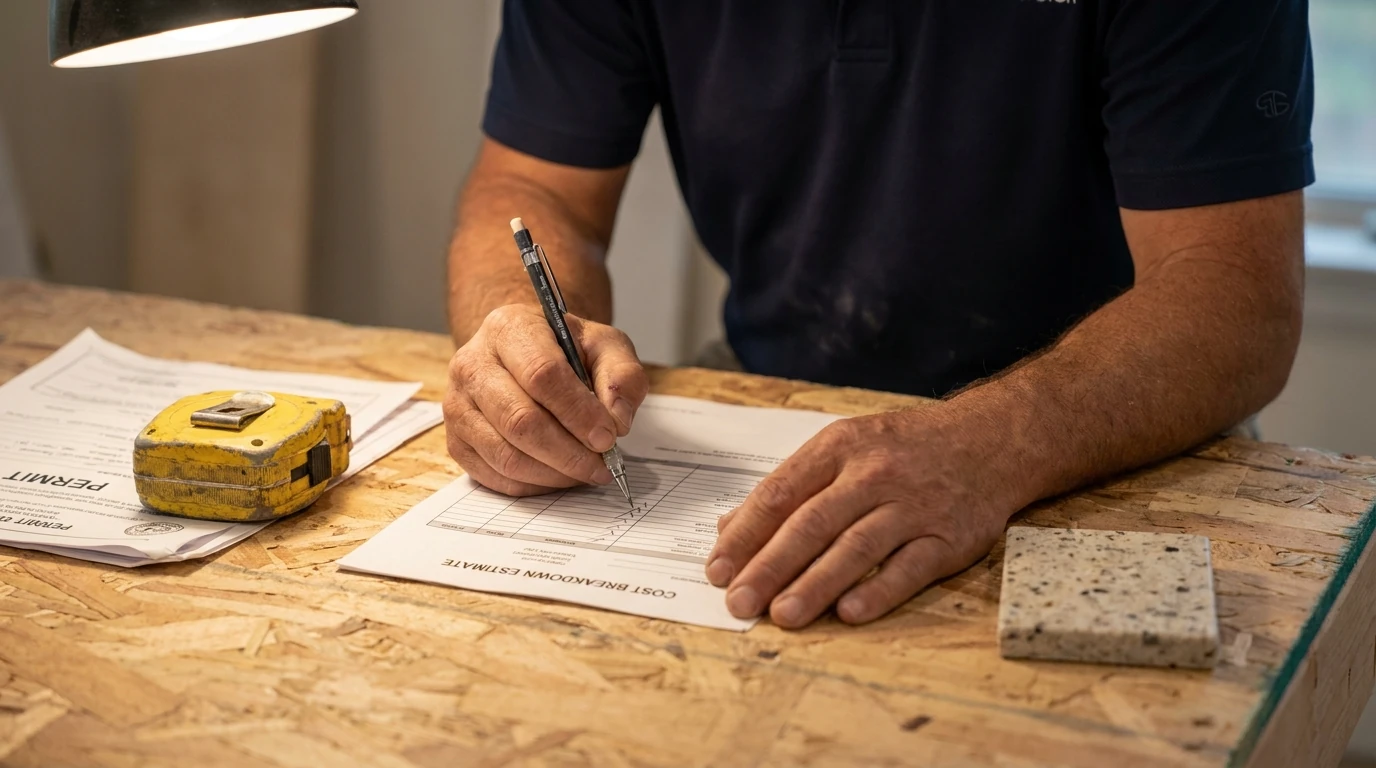
What Does a General Contractor’s Fee Actually Cover?
A GC’s fee covers more than most homeowners realize before they’ve run a project. The markup pays for:
Project management. Someone is scheduling every trade, framing, electrical, plumbing, HVAC, drywall, tile, paint, so they show up in the right order and don’t step on each other. That coordination is a full-time job on a mid-size remodel.
Subcontractor vetting and accountability. A GC’s subs have been vetted for licensing, insurance, and quality. If a sub does bad work, the GC makes it right, not you.
Permits and inspections. Pulling permits, scheduling inspections, and ensuring the work passes code is the GC’s responsibility. In Madison and Huntsville, residential permits for additions and remodels are required by the city and Madison County. A GC who skips permits is handing you a future problem at resale.
Materials procurement. GCs buy materials at trade pricing, often below retail. On a large project, that discount can partially offset the markup.
Warranty. Most reputable GCs warrant their work for one year minimum on labor. If something fails in that window, they fix it.
Insurance and liability. A licensed and insured GC carries general liability and workers’ comp. If a worker is injured on your property and the GC lacks coverage, you’re exposed. This protection is built into the markup.
A Real North Alabama Example: Madison Subdivision Kitchen Remodel
Here’s how a typical home remodeling project breaks down in a 2000s-era subdivision home, the kind common throughout Bradford Creek and Liberty Park in Madison.
Project: Full kitchen remodel, 180 sq ft. New cabinets, quartz countertops, tile backsplash, LVP flooring, updated electrical for island circuits, plumbing relocation for sink, new appliances (owner-supplied).
| Line Item | Cost |
|---|---|
| Demolition and debris removal | $1,800 |
| Rough electrical (new circuits, panel work) | $3,200 |
| Plumbing relocation | $2,400 |
| Cabinets (semi-custom) | $12,000 |
| Countertops (quartz, installed) | $5,500 |
| Tile backsplash (labor + material) | $2,200 |
| LVP flooring (labor + material) | $2,800 |
| Drywall, paint, trim | $2,400 |
| Permit | $350 |
| Subtotal (hard costs) | $32,650 |
| GC fee (15%) | $4,898 |
| Total | $37,548 |
On this project, the GC fee is $4,900, roughly what you’d pay a project manager for two weeks of full-time work. For four to six weeks of active coordination across five or six trades, that’s not an unreasonable number.
If the same project were bid cost-plus at 12%, and actual costs came in at $34,000, the fee would be $4,080. The difference between structures is smaller than most homeowners expect, the bigger variable is how well the GC estimated the hard costs.
How Do You Know If a GC’s Price Is Fair?
Getting two or three written bids is the baseline. But bids are only comparable when they cover the same scope, make sure each bid specifies the same materials, finishes, and inclusions before you compare the bottom line.
A few things to check on any bid:
Is the markup percentage disclosed? In a cost-plus contract, it must be. In a fixed-price bid, you may not see it broken out, but a reputable GC will tell you their fee structure if you ask.
What’s excluded? Common exclusions: owner-supplied appliances, permit fees (sometimes passed through at cost), design fees, structural engineering if required. An unusually low bid often has a long exclusions list.
What’s the payment schedule? A standard schedule ties payments to milestones, deposit at signing, draw at rough-in complete, draw at drywall, final payment at punch-list completion. Avoid any GC who wants more than 30–35% upfront on a remodel.
Is the GC licensed and insured? In Alabama, general contractors performing work over $10,000 are required to hold a state contractor’s license. Ask for the license number and verify it with the Alabama Licensing Board for General Contractors. Davis Construction Inc. is licensed and insured.
Do they pull their own permits? A GC who asks you to pull the permit is shifting risk to you. Don’t accept that arrangement.
What Should You Do Before Signing a GC Contract?
Before you sign, three things matter most: scope clarity, payment terms, and change-order language.
Get the scope in writing at a line-item level. Vague scopes produce disputes. “New kitchen cabinets” is not a scope, “36 linear feet of semi-custom cabinetry, brand and line to be selected from contractor’s supplier” is a scope.
Read the change-order clause. Every project has changes. The contract should specify that changes require written authorization with a price agreed before work starts. Verbal approvals lead to surprise invoices.
Confirm the warranty terms in writing. One year on labor is standard. Ask specifically what’s covered and what the process is for a warranty claim.
If you’re planning a major remodel or a ground-up build in the Madison or Huntsville area, Davis Construction Contractors handles projects from initial scope through final walkthrough. Call (256) 771-0326 Monday through Friday to schedule a consultation, or request an estimate online.
About Davis Construction Contractors
Davis Construction Contractors is a family-owned, licensed and insured general contractor serving Madison, Huntsville, Athens, and surrounding North Alabama communities since 2008. Their crews handle home remodeling, new construction, decks, roofing, siding, and restoration work across the region. Reach them at (256) 771-0326, Monday through Friday, 8:00 AM to 5:00 PM.