TL;DR: Attic mold in Athens, AL typically develops when warm, humid air gets trapped in an under-ventilated attic or when a roof leak introduces standing moisture. Professional removal runs $1,500–$6,000 depending on the affected area and the materials involved. Left alone, mold spreads to sheathing and rafters, eventually compromising structural wood. The fix requires treating the mold, correcting the moisture source, and improving airflow, in that order.
If you’ve pulled down your attic hatch and spotted dark staining on the sheathing or smelled something musty you can’t place, you’re not alone. Athens sits in a climate that makes attics particularly vulnerable: hot, humid summers push moisture-laden air upward through ceiling penetrations, and older 1950s–1970s brick ranch homes common in neighborhoods like Sanderfer Heights and Westover Hills often have attic ventilation systems that were undersized to begin with. A single slow roof leak near a ridge vent or around a flashing seam can saturate wood sheathing for months before anyone notices.
What causes attic mold in North Alabama homes?
Attic mold grows when three things meet: a food source (wood), warmth, and moisture that doesn’t dry out. In Athens-area homes, the moisture almost always comes from one of two places: a roof leak or inadequate ventilation that lets humid interior air condense on cooler attic surfaces.
Roof leaks are the more obvious culprit. A cracked pipe boot, deteriorated flashing around a chimney, or missing shingles after a storm can drip water onto sheathing for weeks before it shows up as a ceiling stain inside the house. By then, mold colonies are already established. The East Limestone Road corridor sees a lot of newer construction, but even 10-year-old roofs can develop flashing failures that go undetected.
Ventilation problems are subtler but just as common. Building science calls this “stack effect”: warm, moist air from bathrooms, kitchens, and living spaces rises and finds its way into the attic through recessed lights, attic hatches, and unsealed top plates. If the attic doesn’t have enough exhaust ventilation to move that air out, it condenses on the cooler underside of the roof deck. The EPA’s indoor air quality guidance identifies moisture control as the single most important factor in preventing mold growth. You can treat the mold all day, but if the moisture source stays, the mold comes back.
A third, less common cause: improperly vented bathroom or dryer exhaust fans that terminate in the attic instead of through the roof. This pumps warm, saturated air directly onto wood surfaces.
Is attic mold dangerous?
Attic mold poses real health risks, particularly for people with asthma, allergies, or compromised immune systems. Mold spores become airborne during disturbance and can migrate into living spaces through the same ceiling gaps that let humid air into the attic in the first place.
The most common attic mold species are Cladosporium, Penicillium, and Aspergillus. These are not the same as Stachybotrys chartarum (commonly called black mold), though any mold growth warrants removal. If you’re unsure what type you’re dealing with, our post on black mold vs. regular mold covers the visual and testing differences in detail.
Beyond health, structural risk matters. Mold digests the lignin in wood. Sheathing that looks solid can be soft and crumbling underneath a mold colony that’s been growing for a season or two. Rafters and ridge boards can be affected in severe cases. Catching it early keeps the remediation scope, and the cost, manageable.
How much does attic mold removal cost in Athens, AL?
Professional attic mold remediation in the Athens area typically runs $1,500–$6,000 for a residential attic, with most jobs landing between $2,000 and $4,000. The range is wide because scope varies significantly.
Here’s what drives the number:
- Affected square footage. A 50 sq ft patch near a single leak point is a half-day job. Mold covering 400+ sq ft of sheathing is a multi-day project with full containment.
- Material condition. Surface mold on solid sheathing can be treated with HEPA vacuuming, wire brushing, and an EPA-registered antimicrobial. Sheathing that’s soft, delaminated, or structurally compromised needs to be removed and replaced, that adds material and labor cost.
- Containment and air filtration. Proper remediation requires sealing the attic from living spaces with poly sheeting and running HEPA air scrubbers throughout the job. This is not optional, it’s what prevents cross-contamination.
- Roof repair. If a leak caused the mold, the leak has to be fixed as part of the project scope. Mold remediation without fixing the roof is money wasted. A roofing inspection and repair should happen alongside or before remediation begins.
- Ventilation upgrades. Adding ridge venting, soffit baffles, or power ventilators to correct the underlying airflow problem adds cost but is often the difference between a one-time fix and a recurring problem.
For a detailed look at what remediation costs across the region, see our mold remediation cost guide for Madison, AL.
What does the attic mold removal process actually look like?
A professional remediation follows a defined sequence. Here’s what to expect:
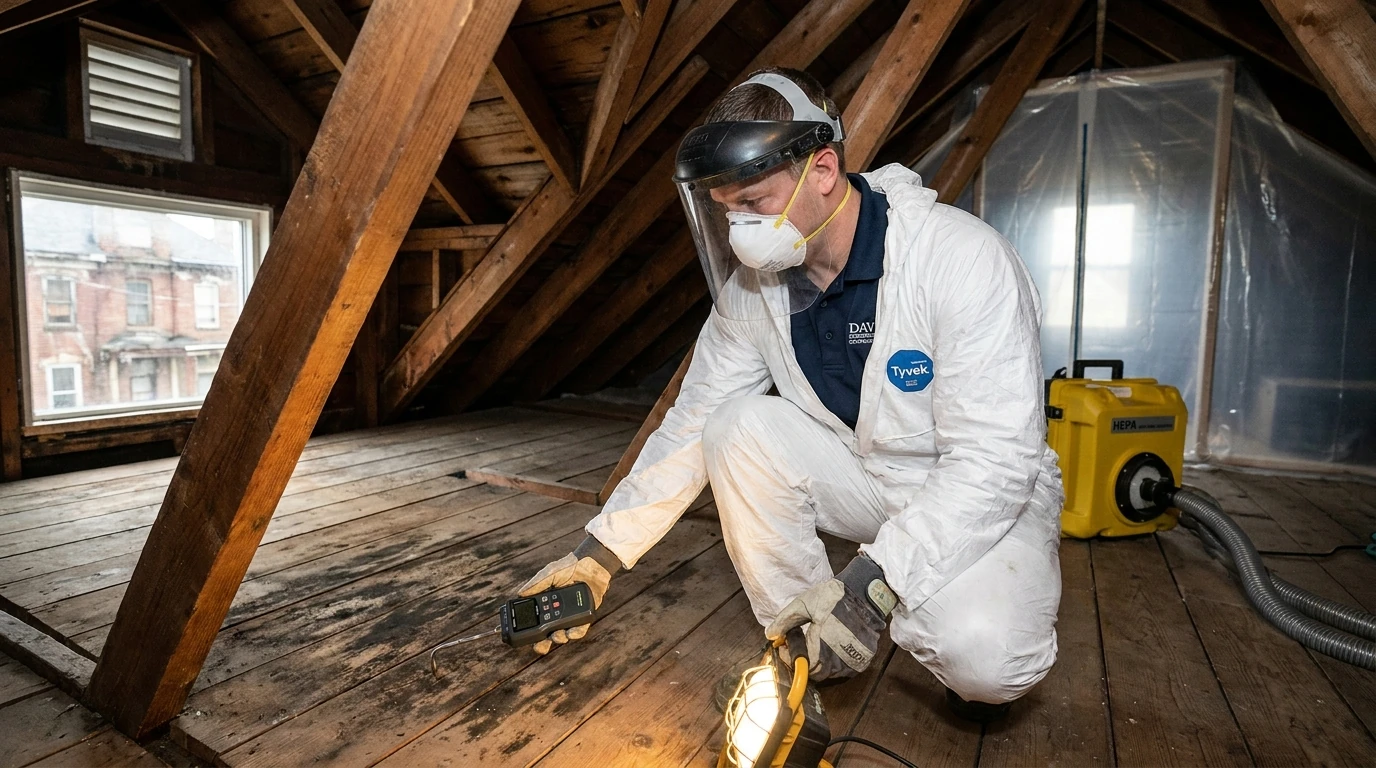
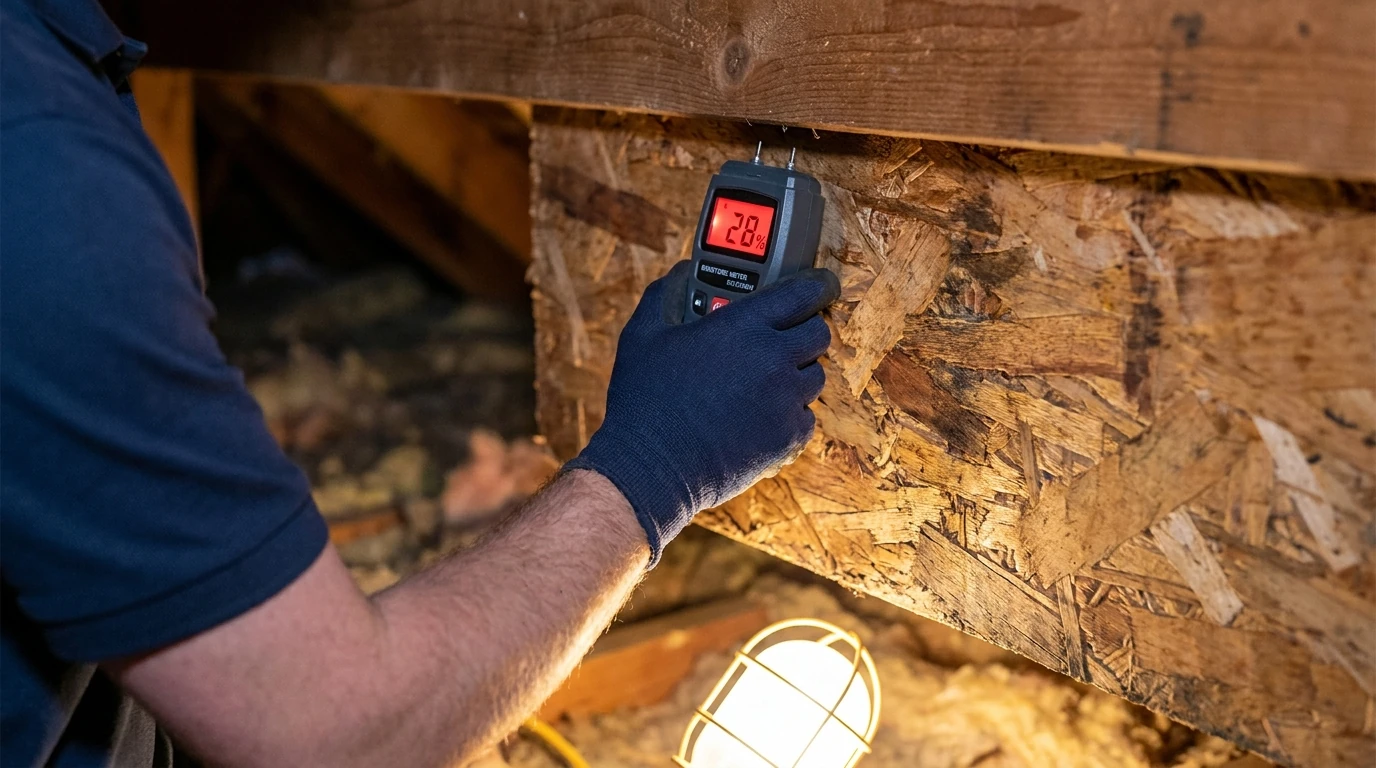
- Inspection and moisture mapping. A technician uses a moisture meter and sometimes a thermal camera to locate wet areas and trace the moisture source. This step determines scope before any work begins.
- Containment setup. Poly sheeting seals the attic access point. A HEPA air scrubber runs in negative pressure mode, pulling air out through a filter rather than letting spores drift into the house.
- PPE and worker protection. Technicians working in a mold-affected attic wear full Tyvek suits, N95 or P100 respirators, gloves, and eye protection. This is standard practice, not overkill.
- Mold removal. HEPA vacuuming removes loose spore colonies. Wire brushing or sanding clears surface growth from wood. An EPA-registered antimicrobial is applied and allowed to dry.
- Sheathing replacement (if needed). Compromised panels are removed and replaced. New sheathing is treated before installation.
- Source correction. The moisture source is addressed, roof repair, ventilation improvement, or exhaust fan rerouting.
- Post-remediation verification. Air sampling or surface swabs confirm spore counts are back to normal background levels before containment comes down.
If you’ve also had water intrusion into living spaces, read our guide on how quickly mold grows after water damage, the timeline matters for how urgently you need to act.
How do you prevent attic mold from coming back?
Prevention comes down to keeping moisture out and keeping air moving. These are the measures that actually work:
Fix the roof first. Any penetration, pipe boots, ridge caps, step flashing, valley metal, is a potential leak point. Annual roof inspections catch small failures before they become mold problems. North Alabama’s spring hail season can damage shingles in ways that aren’t visible from the ground.
Verify your ventilation ratio. The standard is 1 sq ft of net free ventilation area per 150 sq ft of attic floor space (or 1:300 with a vapor barrier). Many older Athens homes fall short of this. Ridge vents paired with continuous soffit vents are the most effective passive system.
Seal ceiling penetrations. Recessed lights, attic hatches, and top plates are the main paths for humid interior air to enter the attic. Weatherstripping an attic hatch and air-sealing around fixtures costs very little and makes a measurable difference.
Reroute bath and dryer exhausts. Every bathroom exhaust fan and dryer vent must terminate outside, through the roof or a gable wall, not into the attic space. This is a code requirement under the International Residential Code (IRC Section M1501) and a common deficiency in older homes.
Check after every major storm. Hail and high winds can dislodge flashing and crack shingles without leaving obvious interior damage. A post-storm roof check is the cheapest mold prevention available.
If you’re seeing signs of mold elsewhere in the house, our post on 7 signs you have hidden mold can help you figure out how far the problem extends before you call anyone.
Davis Construction Contractors handles both sides of this problem, mold remediation and the roofing work that stops the moisture at its source. If you’re in the Athens area and want an assessment, call (256) 771-0326 Monday through Friday, 8 AM to 5 PM, to schedule a site visit.
About Davis Construction Contractors
Davis Construction Contractors is a family-owned construction and restoration company serving Athens, Limestone County, and the greater North Alabama region since 2008. The company is licensed and insured, handling mold remediation, roofing, water damage restoration, storm damage repair, and full home remodeling across the region. Davis Construction Contractors serves homeowners in Athens (35611, 35613), Madison, and Huntsville.